Within Hotspots
When One UAP Station Is Not Enough
Single-site detections can be intriguing, but distance, altitude and identity often require corroboration from other sensors or stations.
On this page
- What a single station can record well
- Why range and altitude remain hard from one viewpoint
- How networks add corroboration without chasing hype
Page outline Jump by section
Introduction
A single automated UAP monitoring station can produce valuable observations, but it rarely provides enough information to determine exactly what an object was, how far away it was, or how it moved in three dimensions. A camera may accurately record an object’s apparent brightness, direction and angular motion, yet still be unable to distinguish between a nearby slow-moving object and a distant fast-moving one. This is why modern proposals for instrumented UAP research increasingly emphasise multiple stations, synchronised sensors and independent corroboration rather than relying on isolated recordings. NASA’s independent UAP study likewise concluded that calibrated, repeatable, multi-sensor measurements are essential if unusual observations are to move beyond anecdote into scientific evidence.[NASA Science]science.nasa.govScience Independent Study Team ReportNASA ScienceIndependent Study Team ReportSeptember 13, 2023 — Eye- witness reports should be considered along with corroborating sensor d…
 Within the broader question of hotspot monitoring versus random-sky coverage, this distinction is important. A hotspot station may detect recurring events efficiently, but confirming what those events actually are often requires observations from somewhere else.
What a single station can record well
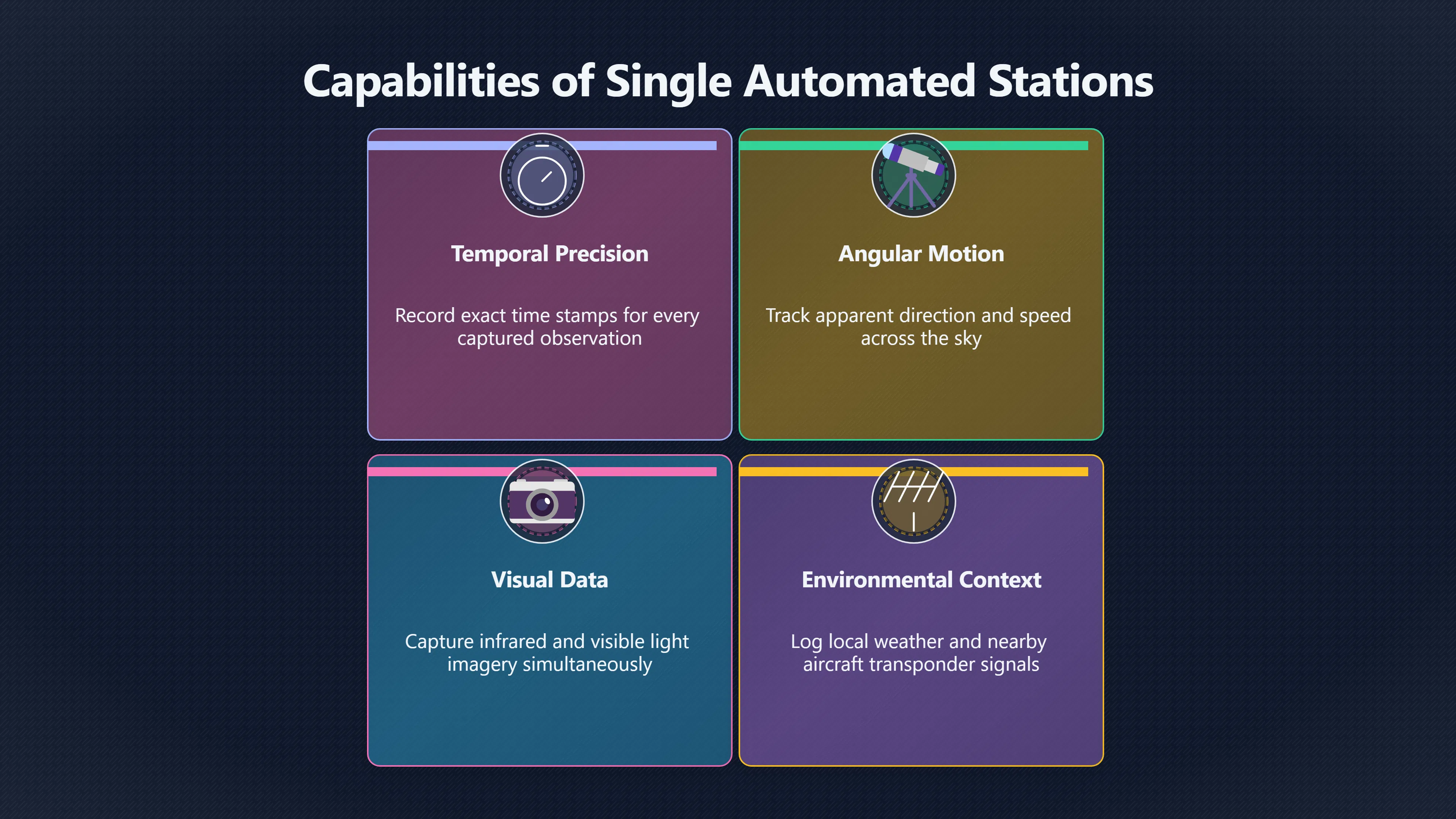
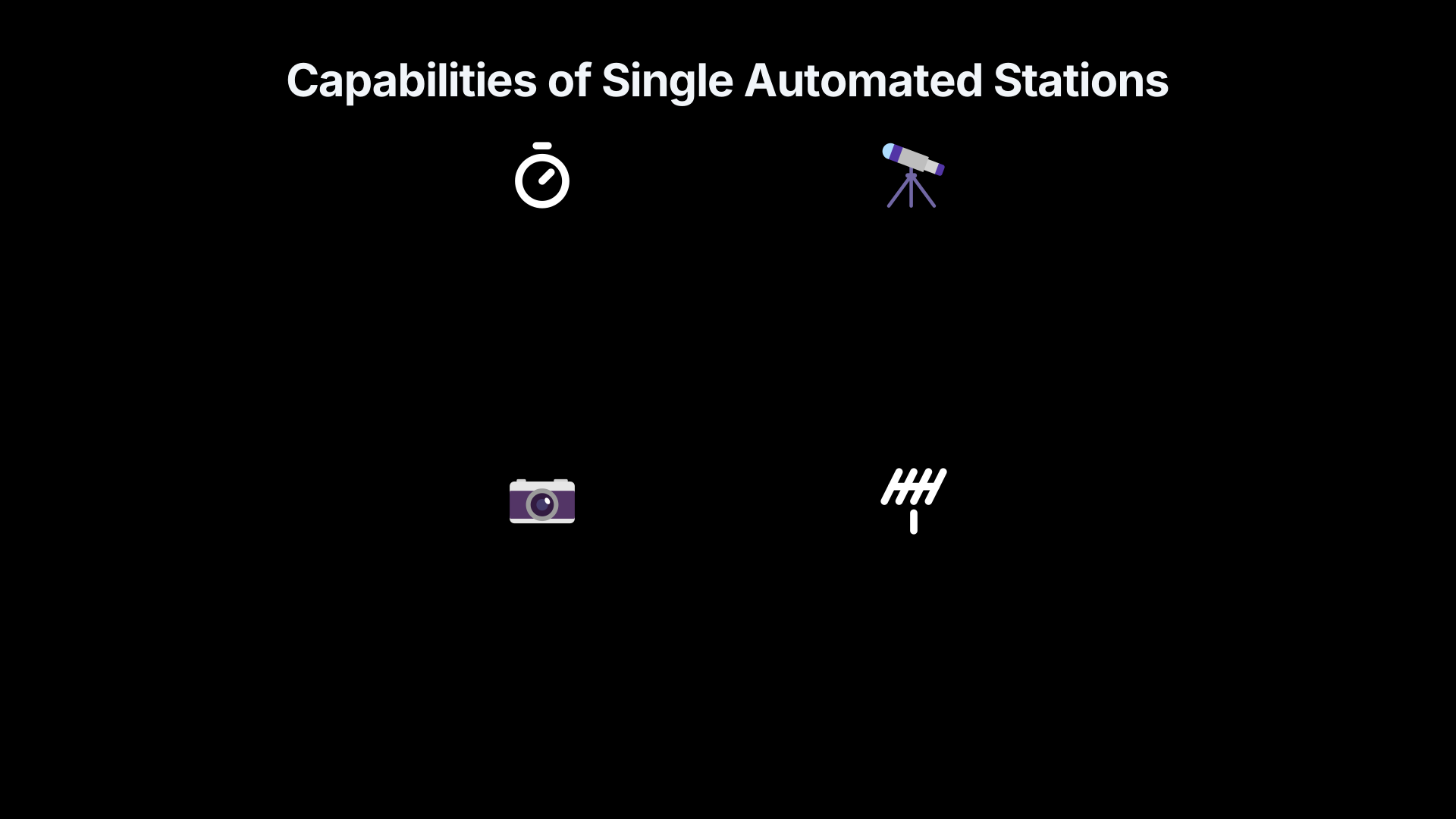
A well-designed automated station can gather far more than an ordinary witness account. Depending on its equipment, it may continuously record:
- Precise time stamps.[avi-loeb.medium.com]avi-loeb.medium.comScientific Alternative to Government Disclosure: The Galileo…This method of triangulation, enabled by accurate time stamps, allows us…
- Apparent direction (azimuth and elevation).
- Angular speed across the sky.
- Brightness and colour changes.
- Infrared and visible-light imagery.
- Local weather and environmental conditions.
- Nearby aircraft transponder signals, satellite predictions and other contextual data.
These measurements make later analysis much stronger than relying on human memory alone. A calibrated camera also allows investigators to identify many ordinary objects—including aircraft, satellites, meteors, drones and astronomical targets—with much greater confidence than eyewitness reports alone. NASA’s report stresses that calibrated sensors, metadata and known instrument performance are fundamental requirements for reproducible scientific investigation.[NASA Science]science.nasa.govScience Independent Study Team ReportNASA ScienceIndependent Study Team ReportSeptember 13, 2023 — Eye- witness reports should be considered along with corroborating sensor d…
A single station is therefore excellent for answering questions such as:
- When did something occur?
- Where did it appear in the sky?
- How did it change in brightness?
- Did environmental conditions coincide with the event?
Those are valuable observations, but they leave important physical quantities unresolved.
Why range and altitude remain hard from one viewpoint
The central limitation of one observing location is geometry.
A camera records an object’s angular position against the sky, not its actual distance. Without knowing the range, many derived quantities become uncertain.
For example, an object crossing five degrees of sky in two seconds could represent:
- a bird passing a few dozen metres away,
- a drone several hundred metres away,
- an aircraft kilometres distant,
- or, in some cases, a satellite seen under unusual perspective.
The apparent motion alone does not distinguish among these possibilities.
This uncertainty affects several key measurements:
- Altitude cannot usually be determined.
- True speed remains unknown.
- Acceleration may be greatly overestimated because perspective effects become impossible to separate from genuine motion.
- Physical size cannot be inferred because angular size depends on both object size and distance.
NASA specifically notes that apparent anomalous motion in some widely discussed recordings can arise from camera geometry and the movement of the observing platform itself rather than extraordinary object behaviour. Without independent geometric constraints, perspective remains one of the largest sources of error.[NASA Science]science.nasa.govScience Independent Study Team ReportNASA ScienceIndependent Study Team ReportSeptember 13, 2023 — Eye- witness reports should be considered along with corroborating sensor d…
How multiple stations solve the geometry problem
Adding a second observing station transforms the problem.
If two synchronised cameras observe the same object from different locations, each measures a different viewing angle. The intersection of those sight lines provides a geometric estimate of the object’s position through triangulation.
Once range is known, investigators can calculate:
- three-dimensional position,[avi-loeb.medium.com]avi-loeb.medium.comScientific Alternative to Government Disclosure: The Galileo…This method of triangulation, enabled by accurate time stamps, allows us…
- altitude,
- true velocity,
- acceleration,
- flight path,
- and uncertainty bounds on all of those measurements.
Time synchronisation is equally important. Modern systems generally rely on GPS-derived timing or similarly precise clocks so observations from different stations can be matched frame by frame.
The Galileo Project identifies triangulation between widely separated observing units as a core design requirement because accurate three-dimensional trajectories are necessary before claims about unusual flight performance can even be evaluated. Its proposed observatories combine multiple cameras with radio, infrared, acoustic and environmental sensors specifically to improve corroboration while reducing false positives.[Galileo Project]galileo.hsites.harvard.eduGalileo ProjectThe Scientific Investigation of Unidentified Aerial Phenomena…A primary objective of the Galileo Project is to build an…
Corroboration is more than adding another camera
Independent confirmation also reduces the risk of mistaking local artefacts for genuine aerial objects.
A bright reflection inside one camera lens, an insect flying close to one sensor, or a temporary electronic glitch usually affects only one instrument. If another station several kilometres away records nothing corresponding to the event, investigators have immediate evidence that the anomaly may be local rather than external.
Conversely, simultaneous detections across multiple independent systems greatly strengthen confidence that something physically occupied the observed airspace.
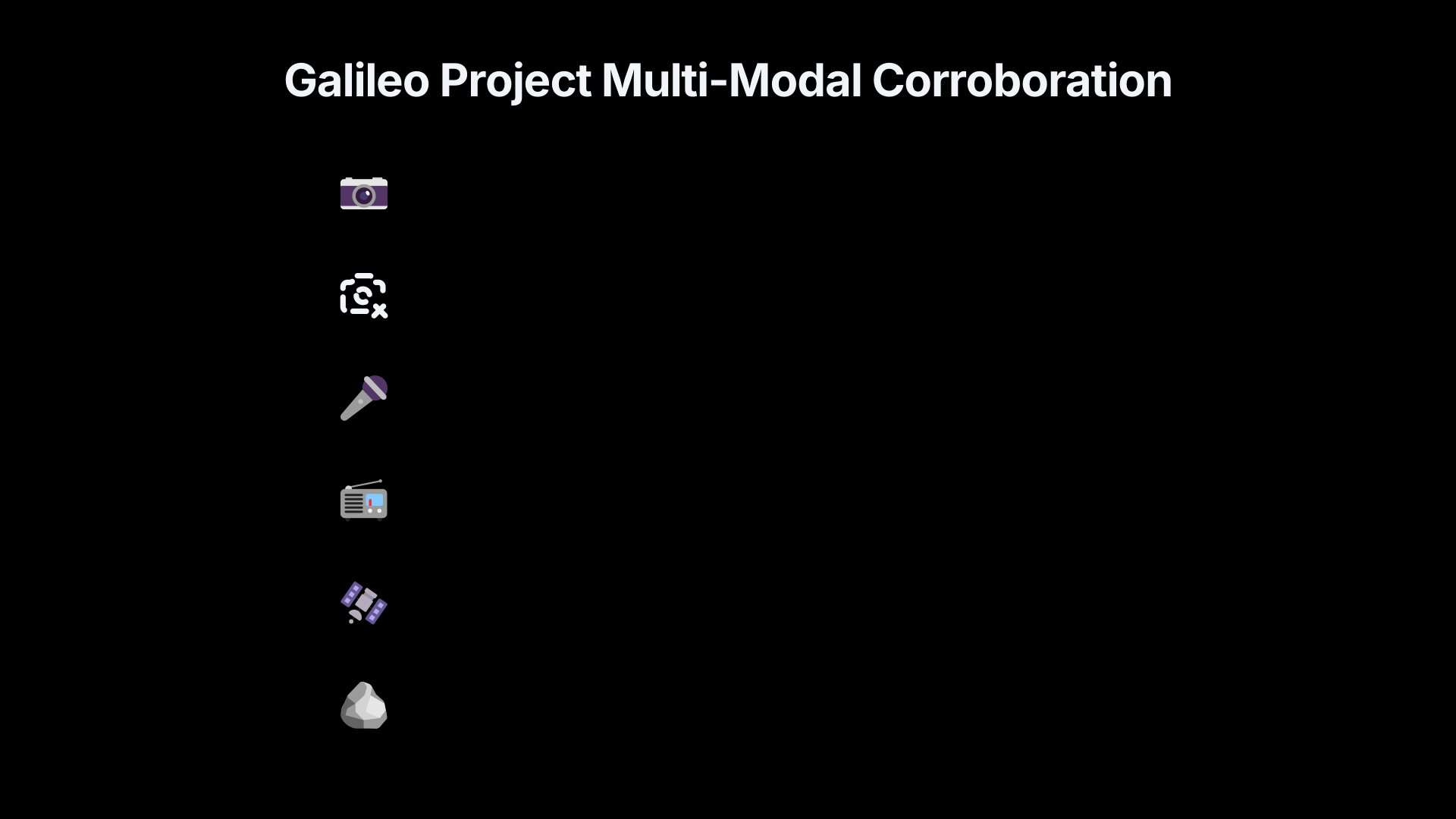
The most useful corroboration often combines different sensing methods, including:
- optical cameras,
- infrared imaging,
- passive radio measurements,
- acoustic sensors,
- environmental monitoring,
- ADS-B aircraft tracking,
- satellite catalogues,
- and meteor databases.
Agreement across different sensor types provides stronger evidence than repeated observations from identical instruments alone. This multi-modal philosophy is central to several current scientific UAP monitoring proposals.[Galileo Project]galileo.hsites.harvard.eduGalileo ProjectThe Scientific Investigation of Unidentified Aerial Phenomena…A primary objective of the Galileo Project is to build an…
Lessons from current instrumented projects
Recent instrumented UAP efforts increasingly treat networking as an engineering requirement rather than an optional enhancement.
The Galileo Project’s published observatory design explicitly incorporates separated observing stations capable of triangulating targets while simultaneously collecting optical, infrared, radio and environmental measurements. The goal is not merely to detect unusual events but to measure them well enough that conventional explanations can be confidently tested and, where appropriate, eliminated.[Galileo Project]galileo.hsites.harvard.eduGalileo ProjectThe Scientific Investigation of Unidentified Aerial Phenomena…A primary objective of the Galileo Project is to build an…
Similarly, reports from the UAPx Catalina Island expedition emphasised practical lessons about synchronising instruments, preserving ancillary sensor data and integrating aircraft tracking information. Several initially intriguing observations became less mysterious once additional contextual information was considered, illustrating how incomplete sensor integration can limit interpretation even when cameras record unusual imagery.[arXiv]arxiv.orgProject Hessdalen Report issue for preceding 5.1.1). ADS-B exchange, were recorded. single sensor…
These experiences reflect a broader engineering lesson: collecting more video is less important than collecting better-correlated measurements.
Networks improve evidence without assuming extraordinary explanations
Building a network of stations does not make unusual explanations more likely. Instead, it makes ordinary explanations easier to test.
With multiple stations, investigators can rapidly determine whether an event corresponds to:
- a satellite,
- atmospheric optics,
- wildlife,
- nearby insects,
- drones,
- weather phenomena,
- or an object whose measured properties genuinely remain unexplained after normal checks.
Even when an event remains unidentified, the uncertainty is narrower because range, altitude and trajectory have been constrained directly rather than inferred indirectly.
For automated UAP detection systems, this represents an important shift in philosophy. The objective is not to maximise the number of unexplained sightings but to maximise the quality of measurements so that as many observations as possible can be confidently identified. Only the small remainder then merit closer investigation, supported by independently corroborated data rather than a single intriguing recording.[NASA Science+2Galileo Project]science.nasa.govScience Independent Study Team ReportNASA ScienceIndependent Study Team ReportSeptember 13, 2023 — Eye- witness reports should be considered along with corroborating sensor d…
Amazon book picks
Further Reading
Books and field guides related to When One UAP Station Is Not Enough. Use these as the next step if you want deeper reading beyond the article.

UFOs : Generals, Pilots, and Government Officials Go on the R...
Places modern UAP evidence discussions into context.
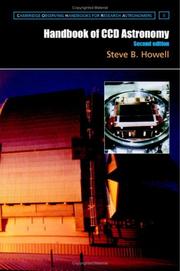
Handbook of CCD astronomy
Explains what calibrated optical systems can and cannot measure.
eBay marketplace picks
Marketplace Samples
Example marketplace items related to this page. Use the search link to explore similar finds on eBay.
Endnotes
1.
Source: science.nasa.gov
Title: Science Independent Study Team Report
Link:https://science.nasa.gov/wp-content/uploads/2023/09/uap-independent-study-team-final-report.pdf
Source snippet
NASA ScienceIndependent Study Team ReportSeptember 13, 2023 — Eye- witness reports should be considered along with corroborating sensor d...
Published: September 13, 2023
2.
Source: science.nasa.gov
Link:https://science.nasa.gov/uap/
Source snippet
NASA ScienceUAP9 Jun 2022 — The study will focus on identifying available data, how best to collect future data, and how NASA can use tha...
3.
Source: arxiv.org
Link:https://arxiv.org/html/2312.00558v4
Source snippet
Project Hessdalen Report issue for preceding 5.1.1). ADS-B exchange, were recorded. single sensor...
4.
Source: galileo.hsites.harvard.edu
Link:https://galileo.hsites.harvard.edu/publications/scientific-investigation-unidentified-aerial-phenomena-uap-using-multimodal
Source snippet
Galileo ProjectThe Scientific Investigation of Unidentified Aerial Phenomena...A primary objective of the Galileo Project is to build an...
Additional References
5.
Source: avi-loeb.medium.com
Link:https://avi-loeb.medium.com/a-scientific-alternative-to-government-[disclosure
Source snippet
Scientific Alternative to Government Disclosure: The Galileo...This method of triangulation, enabled by accurate time stamps, allows us...
6.
Source: rev.com
Title: unidentified anomalous phenomena independent study report from nasa transcript
Link:https://www.rev.com/transcripts/unidentified-anomalous-phenomena-independent-study-report-from-nasa-transcript
Source snippet
UAP Independent Study Report from NASA18 Sept 2023 — The Unidentified Anomalous Phenomena from NASA released a report to the public. Read...
7.
Source: abdn.elsevierpure.com
Title: the scientific investigation of unidentified aerial phenomena uap
Link:https://abdn.elsevierpure.com/en/publications/the-scientific-investigation-of-unidentified-aerial-phenomena-uap
Source snippet
The Scientific Investigation of Unidentified Aerial...13 May 2023 — A primary objective of the Galileo Project is to build an integrated...
Published: May 2023
8.
Source: leonarddavid.com
Title: nasa report released unidentified anomalous phenomena uap
Link:https://www.leonarddavid.com/nasa-report-released-unidentified-anomalous-phenomena-uap/
Source snippet
Unidentified Anomalous Phenomena (UAP) – UPDATED14 Sept 2023 — NASA has released its Unidentified Anomalous Phenomena (UAP) report comple...
9.
Source: youtube.com
Title: Unidentified Anomalous Phenomena Independent Study Report
Link:https://www.youtube.com/watch?v=TQcqOW39ksk
Source snippet
Replay! NASA's Release of the Unidentified Anomalous Phenomena Report...
10.
Source: youtube.com
Title: Replay! NASA’s Release of the Unidentified Anomalous Phenomena Report
Link:https://www.youtube.com/watch?v=nuBMnluJfs0
Source snippet
Inside the AI Alien Hunting Project at Harvard...
11.
Source: old.hessdalen.org
Title: 2025 2502.06794v2
Link:https://old.hessdalen.org/reports/2025-2502.06794v2.pdf
Source snippet
New Science of Unidentified Aerospace-Undersea...1 Apr 2025 — UAP, formerly known as UFOs, Studies range from field station development...
12.
Source: youtube.com
Title: Inside the AI Alien Hunting Project at Harvard
Link:https://www.youtube.com/watch?v=oDAY0_wRjxA
Source snippet
The Galileo Project's First Data on Half a Million Objects with Avi Loeb...
13.
Source: youtube.com
Title: UAP Files JUST Released: Harvard Scientist Avi Loeb
Link:https://www.youtube.com/watch?v=jzLnzBPTDXM
Source snippet
Unidentified Anomalous Phenomena Independent Study Report...
14.
Source: youtube.com
Title: The Galileo Project’s First Data on Half a Million Objects with Avi Loeb
Link:https://www.youtube.com/watch?v=uJtER5ahdPY
Topic Tree