Within Fixed vs Portable
Can the Station Create the Mystery?
Rain, heat, fog, insects, wind vibration, and poor weather-station placement can turn a detector into its own false-alert source.
On this page
- How enclosures, domes, and masts affect data
- Why weather measurements need careful placement
- What portable and fixed stations must protect first
Page outline Jump by section
Introduction
A detector station designed to capture unusual aerial phenomena can accidentally manufacture its own “mysteries”. Rain, condensation, wind, insects, heat, fog and poor weather-sensor placement can all introduce artefacts that resemble anomalous events or make genuine observations impossible to interpret. For automated, instrumented UAP detector stations, weatherproofing is therefore not just about protecting electronics—it is part of data quality assurance.
 Whether a station is portable or permanently installed, the objective is the same: ensure that any apparent anomaly originates in the sky rather than in the enclosure, mounting system or local microclimate. Scientific observing systems, including professional meteorological networks, place great emphasis on enclosure design, sensor exposure, calibration and environmental metadata precisely because poor installation can overwhelm otherwise accurate instruments.[World Meteorological Organization]community.wmo.int8)November 5, 2025 — PROCESS FOR UPDATING THE WMO-No. 8. Procedure for updating the Guide to Instruments and Methods of Observation (WMO…
Can the Station Create the Mystery?
Many apparent anomalies arise because environmental effects change how sensors behave rather than because something unusual is present in the atmosphere. Cameras, infrared imagers, radio receivers and weather instruments all interact with their surroundings, and those interactions must be understood before unusual data can be trusted.
For UAP monitoring, the most common failure mode is not equipment breaking outright but equipment continuing to operate while quietly producing misleading measurements. This makes environmental design every bit as important as sensor sensitivity.
Enclosures and domes can become optical instruments
Outdoor cameras usually require protective housings or transparent domes. Those protective surfaces introduce several risks:
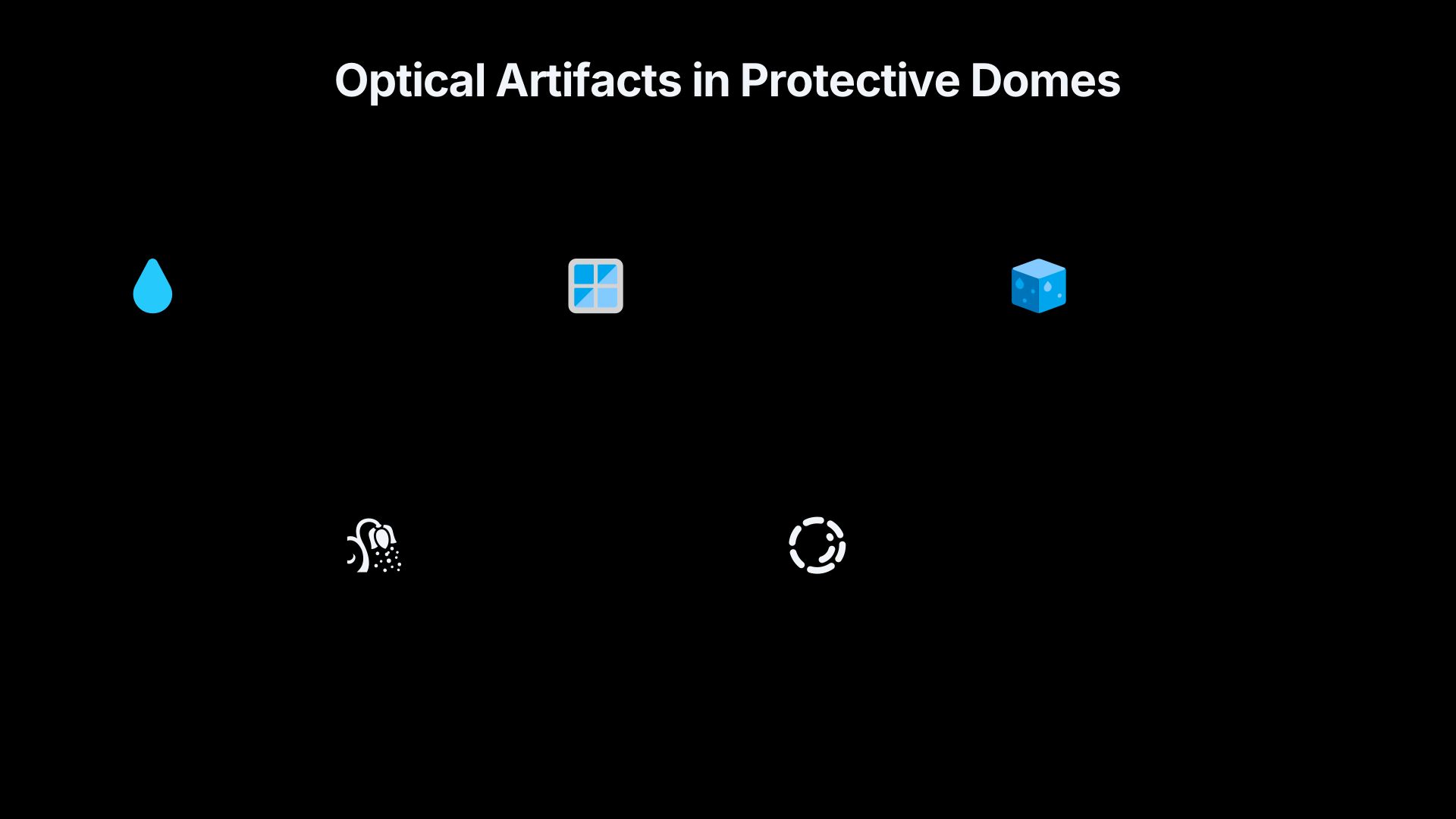
- Water droplets refract and scatter light, producing distorted point sources, elongated streaks and false halos.
- Condensation inside a housing can soften images, create diffuse glows around lights and reduce contrast without obvious signs that the enclosure has fogged internally.
- Ice or frost changes optical transmission and may create bright reflections from artificial lighting.
- Dust, pollen and salt deposits reduce image quality gradually, making long-term degradation difficult to notice without routine inspection.
- Scratches or ageing plastics increase internal reflections, especially when bright lights lie just outside the camera’s field of view.
Night observations are especially vulnerable because tiny amounts of scattered light can appear dramatic against a dark background. A bright aircraft landing light viewed through a wet dome may look substantially different from the same object viewed through a clean optical window.
Professional meteorological and optical observing systems therefore emphasise maintenance, cleaning and documentation of protective surfaces as part of measurement quality rather than simple equipment upkeep.[World Meteorological Organization]community.wmo.int8)November 5, 2025 — PROCESS FOR UPDATING THE WMO-No. 8. Procedure for updating the Guide to Instruments and Methods of Observation (WMO…
Heat can create its own image distortion
Electronics generate heat. Sunlight heats enclosures. Poor ventilation creates temperature differences between the inside and outside of a housing.
These gradients can produce:
- shimmering caused by moving warm air;
- focus drift as lenses expand;
- thermal-camera bias if enclosure temperatures influence nearby sensors;
- accelerated condensation when temperatures rapidly change after sunset.
A sealed waterproof box may therefore solve one problem while creating another if heat cannot escape.
Weather Measurements Only Help When They Are Properly Placed
Environmental measurements become much less useful if the weather station experiences conditions that differ from those affecting the optical sensors.
A weather sensor mounted beside a warm metal enclosure may report temperatures that are several degrees above the surrounding air. A wind sensor below nearby trees may record calm conditions while the mast supporting the camera is actually vibrating.
Professional guidance from the World Meteorological Organization (WMO) and national meteorological agencies stresses that weather instruments should be exposed so that they measure the atmosphere—not the immediate influence of nearby structures, paving, buildings or vegetation. Temperature and humidity sensors require ventilated radiation shields, while wind measurements need adequate clearance from obstructions.[World Meteorological Organization+2Campbell Scientific]community.wmo.int8)November 5, 2025 — PROCESS FOR UPDATING THE WMO-No. 8. Procedure for updating the Guide to Instruments and Methods of Observation (WMO…
For a UAP station, poorly located weather instruments create a second problem: investigators may incorrectly conclude that atmospheric conditions could not have produced an observed effect because the weather data themselves were biased.
Local microclimates matter
A detector mounted on a rooftop, cliff edge or vehicle experiences conditions that may differ significantly from the nearest public weather station.
Examples include:
- roofs radiating heat after sunset;
- concrete producing local thermal plumes;
- nearby trees sheltering wind;
- valleys collecting fog;
- coastal salt spray contaminating sensors.
Recording local weather is valuable only if the measurements genuinely represent the air around the observing instruments.
Wind Is More Than a Structural Problem
Wind affects almost every sensing modality.
Strong gusts can:
- shake camera masts, producing apparent motion;
- excite resonances that repeat at predictable frequencies;
- alter antenna pointing;
- move cables, generating intermittent electrical noise;
- cause branches or nearby objects to enter the field of view.
A lightweight portable tripod may perform perfectly on a calm evening yet become an important source of false detections during moderate winds.
Rigid supports, vibration isolation where appropriate, and continuous recording of wind speed help distinguish environmental movement from genuine aerial motion. Professional observing guidance similarly recommends firmly mounted sensors and stable supports to reduce measurement uncertainty.[National Weather Service]weather.govanization (WMO) is to coordinate the activities of its 188 Members in the generation of data and…
Small Creatures Cause Large Problems
Insects are among the most common sources of apparently unusual images in automated sky monitoring.
A moth flying a few centimetres from a lens may appear as:
- a glowing orb;
- a rapidly accelerating object;
- an oddly shaped luminous body;
- an object apparently changing size between frames.
Spider webs introduce another persistent problem. Fine strands illuminated by infrared LEDs or nearby lighting can appear as moving filaments or bright streaks. Spiders frequently rebuild webs directly in front of cameras because housings provide stable anchor points and attract insects.
Birds nesting beneath enclosures, insects entering ventilation openings and accumulated debris can also interfere with cooling, airflow and optical clarity.
Simple physical measures—mesh-covered vents, careful cable routing, routine inspection and avoiding insect-attracting lights near optical systems—often eliminate these recurring artefacts.
Rain, Fog and Humidity Can Defeat Automated Detection
Weather does not simply reduce visibility; it also changes how automated algorithms classify objects.
Common effects include:
- rain producing bright streaks from short exposure times;
- fog reducing contrast until distant aircraft resemble diffuse luminous objects;
- mist scattering infrared illumination back into the camera;
- water droplets triggering motion-detection software;
- rapidly changing cloud edges producing brightness fluctuations mistaken for movement.
Algorithms trained primarily on clear-weather imagery may generate elevated false-alert rates during deteriorating conditions unless environmental metadata are incorporated into the decision process.
Rather than treating poor weather as background noise, well-designed stations record it continuously so that later analysis can determine whether changing atmospheric conditions explain an observation.
What Portable and Fixed Stations Must Protect First
Portable and permanent installations face different weatherproofing priorities.
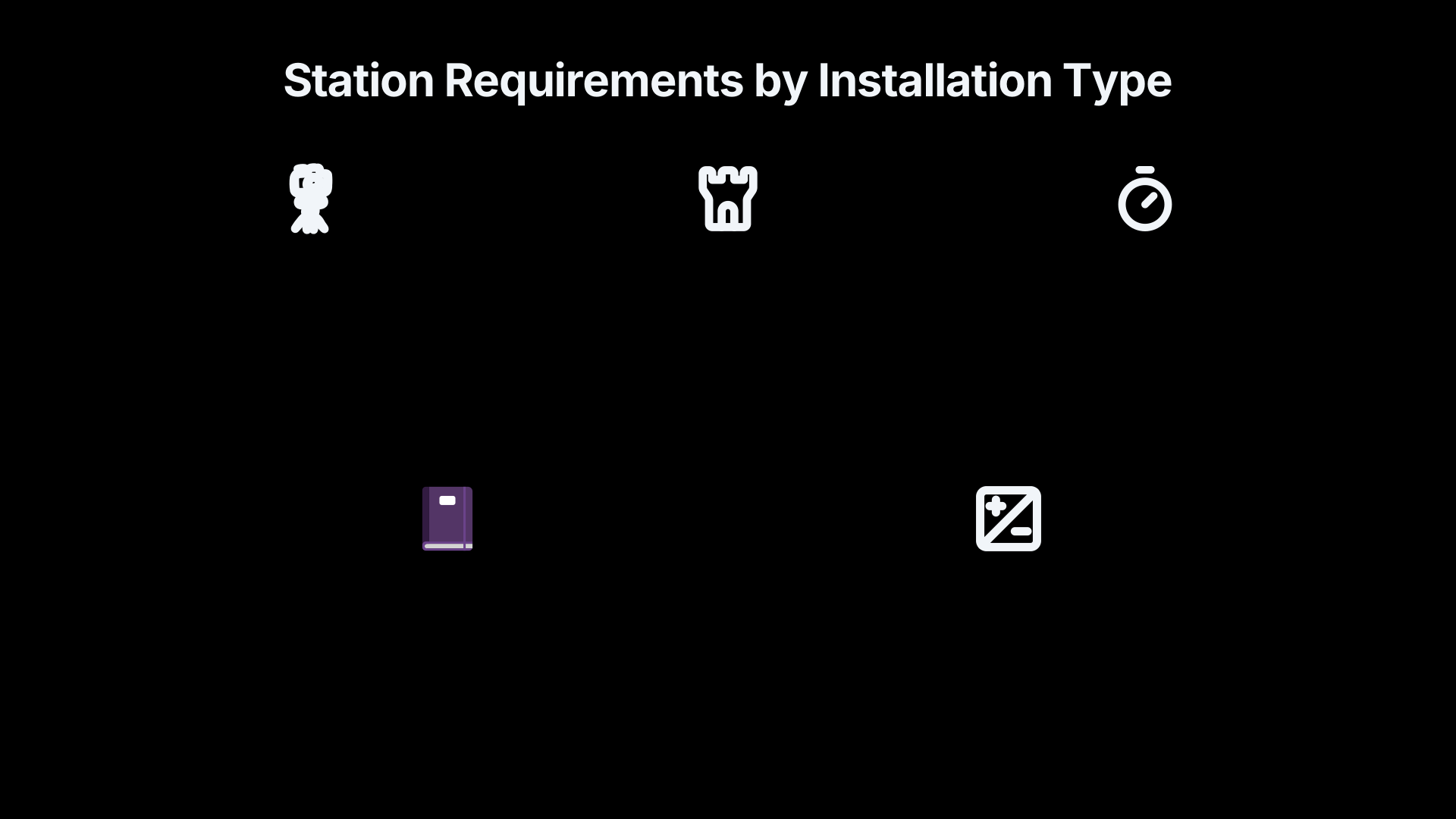
Portable stations should prioritise:
- rapid deployment without compromising sensor alignment;
- stable mounting on uneven ground;
- protection from unexpected rain;
- fast checks for condensation after transport;
- repeatable weather-sensor placement despite changing locations.
Frequent assembly and disassembly increase the risk of slightly altered alignments, loose fittings and damaged seals.
Fixed stations should prioritise:
- long-term resistance to ultraviolet exposure and moisture;
- regular cleaning of optical surfaces;
- corrosion control;
- vegetation management;
- inspection for nests, insects and accumulated debris;
- documentation of any hardware changes.
Because fixed stations build long observational baselines, even small changes—such as replacing a dome, repainting a mast or adding nearby equipment—should be recorded. Otherwise, long-term trends may reflect infrastructure changes rather than changes in the sky.
Weatherproofing Is Part of Scientific Calibration
The strongest UAP detector stations do not merely survive bad weather—they measure and document how weather influences every sensor.
Good practice includes synchronised weather logging, inspection records, maintenance histories, photographs of the installation after modifications, and routine verification that weather instruments remain correctly exposed. These practices make it far easier to distinguish genuine anomalies from environmental artefacts.
For automated instrumented UAP detection, weatherproofing is therefore not a secondary engineering task. It is a core component of observational credibility. A station that cannot demonstrate how rain, heat, wind, insects and enclosure effects were controlled is far more likely to create apparent mysteries than to resolve them.
Amazon book picks
Further Reading
Books and field guides related to Can the Station Create the Mystery?. Use these as the next step if you want deeper reading beyond the article.

UFOs : Generals, Pilots, and Government Officials Go on the R...
Provides context for why high-quality instrumentation and reliable data matter.
The AMS Weather Book
Explains weather effects that can influence outdoor observations and sensors.

The handbook of astronomical image processing
Covers calibration and imaging artifacts relevant to outdoor detector stations.
UFOs
NEW YORK TIMES BESTSELLER • Impeccably researched, this riveting journalistic investigation separates fact from fiction, and documents th...
eBay marketplace picks
Marketplace Samples
Example marketplace items related to this page. Use the search link to explore similar finds on eBay.
Endnotes
1.
Source: community.wmo.int
Link:https://community.wmo.int/site/knowledge-hub/programmes-and-initiatives/instruments-and-methods-of-observation-programme-imop/guide-instruments-and-methods-of-observation-wmo-no-8
Source snippet
8)November 5, 2025 — PROCESS FOR UPDATING THE WMO-No. 8. Procedure for updating the Guide to Instruments and Methods of Observation (WMO...
Published: November 5, 2025
2.
Source: weather.gov
Link:https://www.weather.gov/media/epz/mesonet/CWOP-WMO8.pdf
Source snippet
anization (WMO) is to coordinate the activities of its 188 Members in the generation of data and...
3.
Source: weather.metoffice.gov.uk
Link:https://weather.metoffice.gov.uk/learn-about/how-forecasts-are-made/observations/observation-site-classification
Source snippet
Observation site classificationThe WMO Siting Classification for Surface Observing Stations on Land was formally introduced from 2014, en...
4.
Source: campbellsci.co.uk
Title: Solar Radiation, Height should be
Link:https://www.campbellsci.co.uk/weather-station-siting
Source snippet
Campbell ScientificWeather Station Siting: How to locate your weather stationThe EPA recommends the sensor be no closer than four times t...
Additional References
5.
Source: wcctv.co.uk
Link:https://www.wcctv.co.uk/products/site-condition-monitoring-systems/weather-monitoring-sensors/
Source snippet
Weather Monitoring SensorsWCCTV's weather monitoring sensors provide real-time, location-specific data on wind speed, temperature, humidi...
6.
Source: zbotic.in
Link:https://zbotic.in/weather-station-enclosure-ip65-housing-for-outdoor-sensors/?srsltid=AfmBOopSKfgW6p0EmNCSjRoy6MedJrd2Gwqz0GF0GoFMu3SAocudVxIb
Source snippet
guide to housing ESP32, BME280, and other sensors against India's weather...
7.
Source: biral.com
Title: Meteorological Sensors: A Complete Guide
Link:https://www.biral.com/meteorological-sensors-a-complete-guide/
Source snippet
Senseca UK - BiralA meteorological sensor is any instrument designed to measure one or more atmospheric or weather variables to a defined...
8.
Source: sensorsandtransmitters.com
Title: Meteorology Sensors for Weather Stations
Link:https://sensorsandtransmitters.com/meteorology-sensors-for-weather-stations/
Source snippet
Besides weather influences, meteorological sensors are also exposed to dust, dirt and possibly...
9.
Source: youtube.com
Title: All Right. Let’s Talk About The UFO Thing
Link:https://www.youtube.com/watch?v=Hv-sbtCAz9Y
Source snippet
Inside lunar triangle, STS-48 anomaly: The footage the Pentagon has not explained...
10.
Source: youtube.com
Title: Gimbal UFO
Link:https://www.youtube.com/watch?v=5OVt_SkhCdw
Source snippet
All Right. Let's Talk About The UFO Thing...
11.
Source: youtube.com
Title: Gimbal UFO Video
Link:https://www.youtube.com/watch?v=ka_bX9Hx1H0
Source snippet
Gimbal UFO - Response to ATFLIR Expert John Erhart...
12.
Source: egusphere.copernicus.org
Title: egusphere 2025 5194
Link:https://egusphere.copernicus.org/preprints/2025/egusphere-2025-5194/egusphere-2025-5194.pdf
Source snippet
weather station for weather monitoring, Sensors, 21, 741...
13.
Source: youtube.com
Title: Explained: New Navy UFO Videos
Link:https://www.youtube.com/watch?v=KWz6iVw2vxQ
Source snippet
Gimbal UFO Video - Rotating Glare Explained...
14.
Source: youtube.com
Link:https://www.youtube.com/watch?v=IdYfIRRRABQ
Topic Tree