Within Magnetometers
Why magnetometer placement can make or break data
A useful magnetic channel depends on quiet siting, non-magnetic mounting, weather protection, orientation control, and careful installation logs.
On this page
- Local interference around real detector sites
- Mounting and orientation mistakes
- Station diaries and maintenance checks
Page outline Jump by section
Introduction
For an automated, instrumented UFO detector, a magnetometer is only as useful as the environment in which it operates. A poorly chosen location can produce frequent magnetic disturbances that have nothing to do with unusual aerial phenomena, while a carefully installed station can provide a stable baseline against which genuine anomalies can be tested. In practice, the difference often comes down to mundane details such as buried utility cables, passing vehicles, steel fence posts, nearby electrical equipment, or even the choice of mounting hardware.
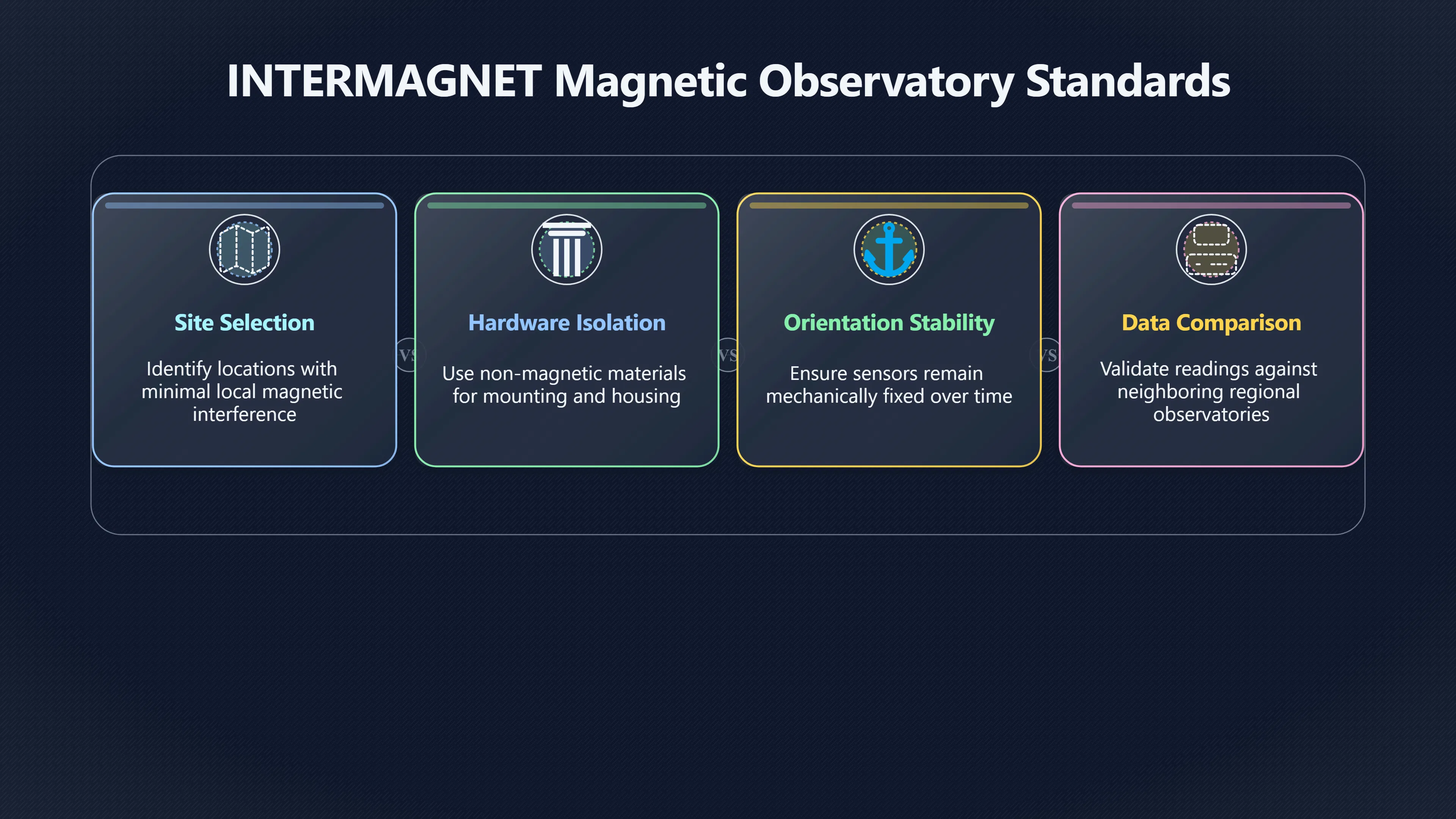
 Professional geomagnetic observatories devote considerable effort to site selection because magnetic contamination is far easier to prevent than to remove during data analysis. The same principle applies to smaller detector installations: reducing local interference is more valuable than relying on increasingly sophisticated software to reject false alarms. Professional guidance from organisations such as INTERMAGNET and national geomagnetic observatories consistently places site quality among the primary determinants of reliable magnetic data.[INTERMAGNET+2pmf.unizg.hr]tech-man.intermagnet.orgINTERMAGNET Technical Reference ManualOct 20, 2014 — An INTERMAGNET Magnetic Observatory (IMO) is a magnetic observatory equip…
Why magnetometer placement can make or break data
A magnetometer measures changes in the local magnetic field, regardless of their source. That means it reacts just as readily to a nearby car, electric gate motor or buried power cable as it does to natural geomagnetic variations.
For a detector network intended to investigate unusual aerial events, this creates an important challenge. A magnetic spike that coincides with a camera detection may appear intriguing until it is discovered that a delivery van stopped outside the property, a heat pump switched on, or maintenance work disturbed nearby infrastructure. Without a magnetically quiet site, every apparent coincidence becomes difficult to interpret.
Professional observatories therefore aim to characterise the magnetic environment before permanent installation. Site surveys look for magnetic gradients, nearby sources of interference and long-term environmental stability rather than simply choosing an open area. Clean surroundings provide a predictable baseline that allows both natural geomagnetic activity and local disturbances to be recognised more confidently.[Data Science Journal+2pmf.unizg.hr]datascience.codata.orgdsjHowever, factors such as observation environment…Read more…
Local interference around real detector sites
Many sources of interference are invisible during a casual inspection but dominate the recorded data once continuous monitoring begins.
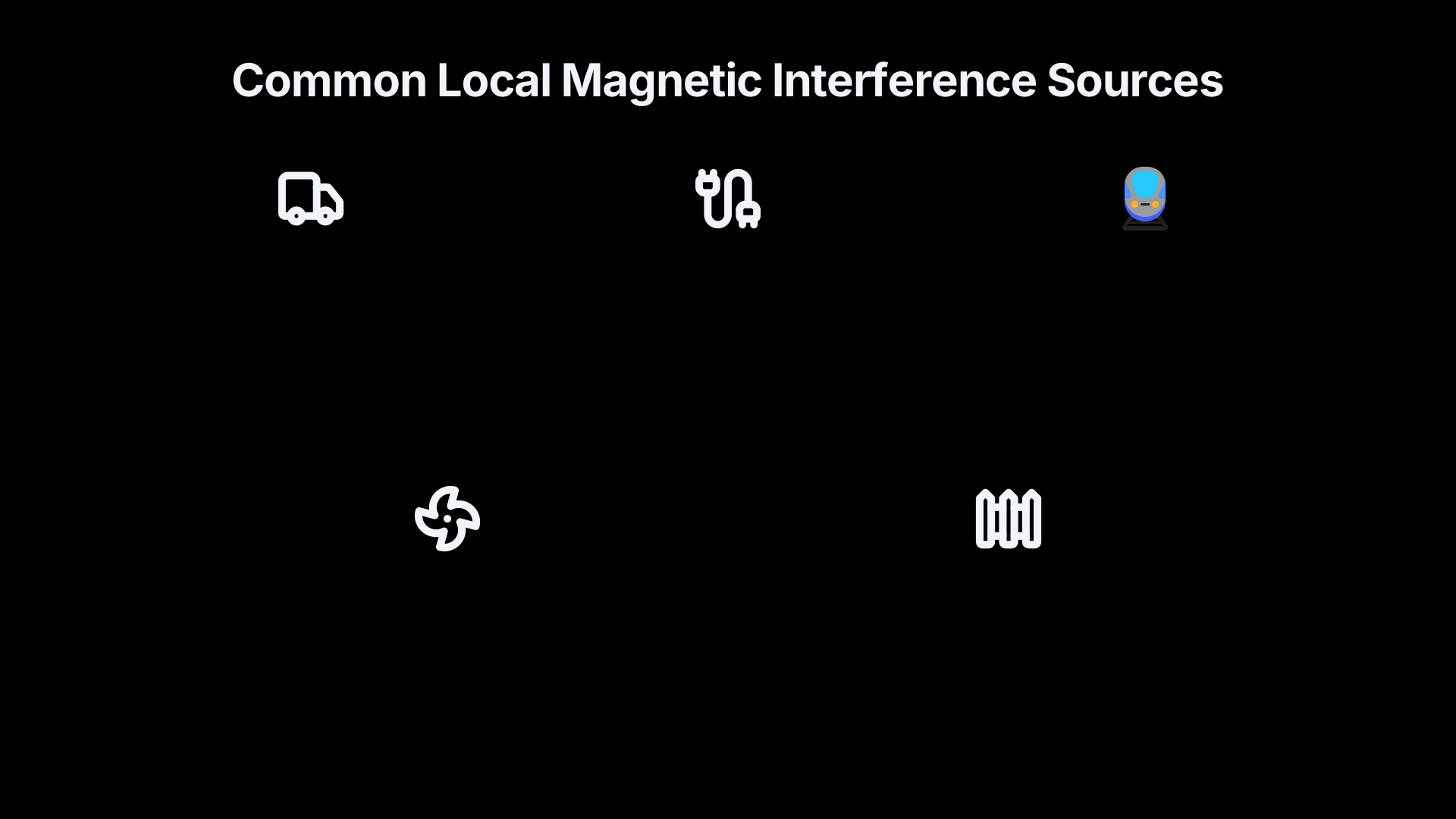
Common problems include:
- Roads carrying regular vehicle traffic, especially heavy vehicles containing large quantities of steel.
- Underground electrical cables and substations.
- Railway lines, particularly electrified systems using direct current, which are well known sources of magnetic contamination.
- Electric vehicle chargers, solar power inverters and battery systems.
- Air-conditioning compressors, pumps and refrigeration equipment cycling on and off.
- Steel fencing, reinforced concrete, sheds and storage containers.
- Agricultural machinery parked near the sensor.
- Temporary construction work introducing cranes, generators or excavators.
Some disturbances occur only occasionally, making them especially deceptive. A weekly refuse collection, a neighbour installing new electrical equipment or seasonal farming activity may generate spikes that appear anomalous unless they are recognised as recurring local events.
Urban environments present particular difficulties because numerous small interference sources combine into what geomagnetic researchers sometimes describe as “magnetic smog”. Studies of observatory performance have shown that transport systems, industrial activity and expanding electrical infrastructure can gradually degrade station quality even when the original location was acceptable.[isgi.unistra.fr+2Data Science Journal]isgi.unistra.frHermanus Magnetic ObservatoryJanuary 27, 2014 — The work is devoted to the analysis of magnetic survey signals caused by the presence of a…
Mounting and orientation mistakes
Even an excellent location can produce poor data if the installation itself introduces magnetic contamination.
Professional guidance recommends using non-magnetic construction materials wherever practical around the sensing element. Steel brackets, reinforcing bars, nails, hinges or nearby tool storage can all distort measurements. Traditional observatories often mount sensors on dedicated non-magnetic pillars isolated from surrounding structures, while modern installations frequently use compact insulated huts or enclosures designed specifically to minimise nearby ferromagnetic material.[pmf.unizg.hr]pmf.unizg.hrIAGA Guide for magnetic measurements and observatory…by J JANKOWSKI · Cited by 417 — fluxgate variometers are 1 nTfC), and non-magnet…
Orientation also matters. Once installed, the sensor should remain mechanically stable so that measured changes represent the Earth’s magnetic field rather than movement of the instrument itself. Accidental rotation during maintenance, settling of foundations or vibration from unstable mounting structures can introduce apparent magnetic variations unrelated to external events.
Weather protection deserves equal attention. Waterproofing should prevent moisture damage without requiring magnetic shielding materials or metallic modifications close to the sensing head. Cables should be secured to avoid movement in wind, which can create subtle mechanical effects that complicate interpretation.
Good installation practice therefore aims for:
- A rigid, vibration-resistant mount.
- Minimal nearby ferrous material.
- Stable orientation over months or years.
- Protected but well-ventilated housing.
- Sensor placement well away from power supplies and electronics whenever cable lengths permit.
Test the site before trusting it
A promising location should be evaluated before it becomes part of a permanent detector network.
A practical commissioning period allows operators to identify recurring disturbances. Several days or weeks of continuous recording can reveal regular signatures from traffic, neighbouring equipment or scheduled industrial activity that would be missed during a brief inspection.
Useful tests include observing whether magnetic readings change when:
- household electrical systems operate;
- nearby gates or garage doors move;
- vehicles enter or leave the property;
- portable radios or computing equipment are brought close to the sensor;
- maintenance activities occur nearby.
Professional geomagnetic programmes also compare candidate stations against established observatories to distinguish local interference from regional geomagnetic events. If multiple stations experience the same disturbance simultaneously, the cause is more likely to be genuine geomagnetic activity, such as space weather, rather than a local source. INTERMAGNET quality guidance similarly emphasises comparison with neighbouring observatories and independent measurements as part of maintaining reliable datasets.[MDPI+2USGS]mdpi.comImproving the Quality of Magnetograms Using Data from…by I Vassilyev · 2025 — As an effective method for solving the problem of ma…
Station diaries and maintenance checks
A station diary is one of the simplest ways to prevent false interpretations.
Every change to the installation should be recorded, including:
- sensor relocation or realignment;
- replacement of mounting hardware;
- nearby construction work;
- installation of new electrical equipment;
- vegetation clearance using machinery;
- software or firmware updates;
- calibration procedures;
- periods of equipment failure or maintenance.
These records become invaluable when reviewing unusual magnetic events months later. An unexplained signal that initially appears significant may coincide exactly with installation of a new fence, servicing of an air-conditioning unit or replacement of a power supply.
Professional observatories routinely document environmental changes because even seemingly minor alterations around a station can affect long-term magnetic records. Modern quality-assurance strategies likewise include monitoring changes in the observation environment alongside instrument maintenance and routine data verification.[Data Science Journal+2INTERMAGNET]datascience.codata.orgdsjHowever, factors such as observation environment…Read more…

Designing for credible anomaly investigations
Within an automated UFO detector, the objective is not to eliminate every magnetic disturbance but to ensure that any remaining anomaly has survived obvious alternative explanations.
A credible magnetic event should occur at a well-characterised site, on a sensor whose orientation and condition are known, with no recorded maintenance or nearby human activity capable of explaining the signal. Ideally, it should also be examined alongside camera imagery, weather information, aircraft tracking, regional geomagnetic observatory data and other environmental sensors.
That approach shifts the emphasis away from collecting dramatic magnetic spikes and towards building a station whose quiet magnetic environment allows ordinary disturbances to be recognised quickly. In practice, careful siting, disciplined installation and meticulous record-keeping contribute more to the evidential value of a magnetic channel than increasing sensor sensitivity alone.
Amazon book picks
Further Reading
Books and field guides related to Why magnetometer placement can make or break data. Use these as the next step if you want deeper reading beyond the article.

Introduction to Geomagnetic Fields
Provides the background needed to understand magnetic field measurements, environmental influences, and reliable observation practices.

Observatories and Telescopes of Modern Times
Covers practical observatory siting and operational considerations that parallel careful instrument installation.
The Demon-Haunted World
NEW YORK TIMES BESTSELLER • From the renowned astronomer and author of Cosmos comes a “powerful [and] stirring defense of informed ration...
Measurement and Instrumentation
Explains measurement accuracy, noise reduction, installation effects, and maintenance principles relevant to magnetometer deployment.
eBay marketplace picks
Marketplace Samples
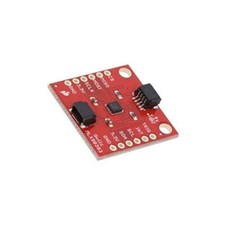
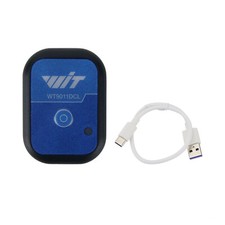
Example marketplace items related to this page. Use the search link to explore similar finds on eBay.
Endnotes
1.
Source: tech-man.intermagnet.org
Link:https://tech-man.intermagnet.org/_/downloads/en/development/pdf/
Source snippet
INTERMAGNET Technical Reference ManualOct 20, 2014 — An INTERMAGNET Magnetic Observatory (IMO) is a magnetic observatory equip...
2.
Source: pmf.unizg.hr
Link:https://www.pmf.unizg.hr/_download/repository/IAGA-Guide-Observatories.pdf
Source snippet
IAGA Guide for magnetic measurements and observatory...by J JANKOWSKI · Cited by 417 — fluxgate variometers are 1 nTfC), and non-magnet...
3.
Source: isgi.unistra.fr
Link:https://isgi.unistra.fr/iagaDivV/docs/IAGA_Workshop_proceedings/XthIAGA_ws.pdf
Source snippet
Hermanus Magnetic ObservatoryJanuary 27, 2014 — The work is devoted to the analysis of magnetic survey signals caused by the presence of a...
Published: January 27, 2014
4.
Source: mdpi.com
Link:https://www.mdpi.com/2076-3417/15/18/10129
Source snippet
Improving the Quality of Magnetograms Using Data from...by I Vassilyev · 2025 — As an effective method for solving the problem of ma...
5.
Source: usgs.gov
Title: geomag plots
Link:https://www.usgs.gov/tools/geomag-plots
Source snippet
U.S. Geological Survey9 Feb 2022 — The "Plots" web application is an intuitive and flexible online visualization tool that allows users t...
6.
Source: intermagnet.org
Link:https://intermagnet.org/docs/technical/im_tn_06_v1_0.pdf
Source snippet
INTERMAGNET Technical NoteNoise level: If magnetometer noise power spectral density (PSD) was solely 1/f dependent, then a specified nois...
7.
Source: tech-man.intermagnet.org
Link:https://tech-man.intermagnet.org/development/chapters/onesecondimos/instrumentationspecs.html
Source snippet
Instrumentation/SpecificationsThese specifications are used by INTERMAGNET as a guideline for reviewing data quality when data are either...
8.
Source: intermagnet.org
Title: Australia 2009
Link:https://intermagnet.org/yearbooks/Australia_2009.pdf
Source snippet
Australian Geomagnetism Report 2009Summary. During 2009, Geoscience Australia operated nine geomagnetic observatories in Australia, the s...
9.
Source: intermagnet.org
Link:https://intermagnet.org/docs/technical/im_tn_4_v1_1.pdf
Source snippet
INTERMAGNET Technical Note1) The 1s INTERMAGNET variometer is a triaxial magnetometer providing measurements of the variations of the geo...
10.
Source: tech-man.intermagnet.org
Link:https://tech-man.intermagnet.org/latest/chapters/oneminuteimos/description.html
Source snippet
intermagnet.org2.1. DescriptionAn INTERMAGNET Magnetic Observatory (IMO) is a magnetic observatory with full absolute control, making con...
11.
Source: usgs.gov
Link:https://www.usgs.gov/programs/geomagnetism/introduction-geomagnetism
Source snippet
Geological SurveySatellite [magnetometers]({{ 'magnetometers/' | relative_url }}) measure the part of Earth's magnetic field... The compass needle aligns itself with the horizon...
12.
Source: usgs.gov
Link:https://www.usgs.gov/programs/geomagnetism
Source snippet
Geomagnetism Program | U.S. Geological SurveyWe monitor the Earth's magnetic field. Using ground-based observatories, we provide continuo...
13.
Source: usgs.gov
Link:https://www.usgs.gov/programs/geomagnetism/science/observatories
14.
Source: pubs.usgs.gov
Title: OF09 1226
Link:https://pubs.usgs.gov/of/2009/1226/pdf/OF09-1226.pdf
Source snippet
of the XIIIth IAGA Workshop on Geomagnetic...21 Mar 2008 — The papers of U.S. Geological Survey authors were reviewed and approved for p...
15.
Source: catalog.data.gov
Link:https://catalog.data.gov/dataset/?tags=geomagnetism-program
Source snippet
USGS Geomagnetism Program operates a network of magnetic observatories that collect vector and scalar magnetometer data for use in Earth...
16.
Source: datascience.codata.org
Title: dsj 2024 009
Link:https://datascience.codata.org/articles/10.5334/dsj
Source snippet
However, factors such as observation environment...Read more...
17.
Source: datascience.codata.org
Link:https://datascience.codata.org/articles/119/files/submission/proof/119-1-223-1-10-20150414.pdf
Source snippet
INVESTIGATION INTO TECHNIQUES FOR ISOLATING...by C Turbitt · 2011 · Cited by 4 — The daily magnetogram of an INTERMAGNET observatory (no...
Additional References
18.
Source: clu-in.org
Link:https://clu-in.org/characterization/technologies/envmagnetics.cfm
Source snippet
Geophysical MethodsSensors can also be mounted high off the ground to eliminate interference from surface debris or close to the ground t...
19.
Source: gfz.de
Link:https://www.gfz.de/en/section/geomagnetism/overview
20.
Source: iigm.res.in
Link:https://iigm.res.in/content/magnetic-observatory-networks-instrumentations
21.
Source: researchgate.net
Title: 319864336 Noise in [raw data]({{ ‘raw-data/’ | relative_url }}) from magnetic observatories
Link:https://www.researchgate.net/publication/319864336_Noise_in_raw_data_from_magnetic_observatories
Source snippet
(PDF) Noise in raw data from magnetic observatories15 Sept 2017 — INTERMAGNET observatories, red stars are non-INTERMAGNET observatories...
22.
Source: researchgate.net
Title: (PDF) Noise in raw data of magnetic observatories
Link:https://www.researchgate.net/publication/316845007_Noise_in_raw_data_of_magnetic_observatories
Source snippet
May 10, 2017 — In this paper, on the basis of the experience gained during long-term magnetic monitoring carried out at the observatories...
Published: May 10, 2017
23.
Source: pubs.geoscienceworld.org
Title: U S Geological Survey Geomagnetic Variometer Data
Link:https://pubs.geoscienceworld.org/ssa/srl/article/97/3/2179/666391/U-S-Geological-Survey-Geomagnetic-Variometer-Data
Source snippet
geoscienceworld.orgU.S. Geological Survey Geomagnetic Variometer Data5 Nov 2025 — When installing a magnetometer at a station, it is isol...
24.
Source: ncei.noaa.gov
Title: world magnetic model
Link:https://www.ncei.noaa.gov/products/world-magnetic-model
Source snippet
Magnetic Model (WMM)The World Magnetic Model (WMM) is the standard model for navigation, attitude, and heading referencing systems that u...
25.
Source: unesdoc.unesco.org
Link:https://unesdoc.unesco.org/ark%3A/48223/pf0000014502
Source snippet
UNESCO DocumentsNotes on geomagnetic observatory and survey practice29 Piers, which should be of perfectly non-magnetic material, may be...
26.
Source: youtube.com
Title: Skywatcher: Function, Purpose, and Scientific Framework | Garry Nolan
Link:http://www.youtube.com/watch?v=kPodKWDFrp4
Source snippet
UAP Detection Efforts within the American Institute of Aeronautics & Astronautics | Michael Lembeck...
27.
Source: youtube.com
Link:http://www.youtube.com/watch?v=0l_ZF_d2EQI
Source snippet
"UAP Summit" magnetometer tracking OR sensor The Role of [Radar]({{ 'radar/' | relative_url }}) in Multi-Mode Sensing | Gene Greneker UAP Summit...
Published: March 8, 2026
Topic Tree