Within Radar
Why backyard radar is not a casual upgrade
Active radar may sound attractive, but transmitting radio energy raises licensing, interference and safety problems for private stations.
On this page
- Why transmitting radio energy is regulated
- Interference risks near aviation and communications
- Why passive reception is the safer first step
Page outline Jump by section
Introduction
Active radar appears to offer an attractive upgrade for an automated UAP observation station because it can measure range directly rather than relying only on cameras. In practice, however, transmitting radar signals is not simply a technical challenge—it is a regulatory one. In most countries, deliberately transmitting radio energy requires legal authority, use of an allocated frequency, compliance with technical standards, and measures to prevent harmful interference with other spectrum users. These requirements exist regardless of whether the system is intended for scientific research, hobby experimentation or alleged UFO detection. As a result, passive radio reception is generally a far more practical and legally straightforward option for civilian sky-monitoring projects.[www.ofcom.org.uk]ofcom.org.ukAn aeronautical radio licence under the Wireless Telegraphyradar ground station licence application formNovember 15, 2021 — You may use this form to apply, amend or surrender an aeronautical radar…

Why transmitting radio energy is regulated
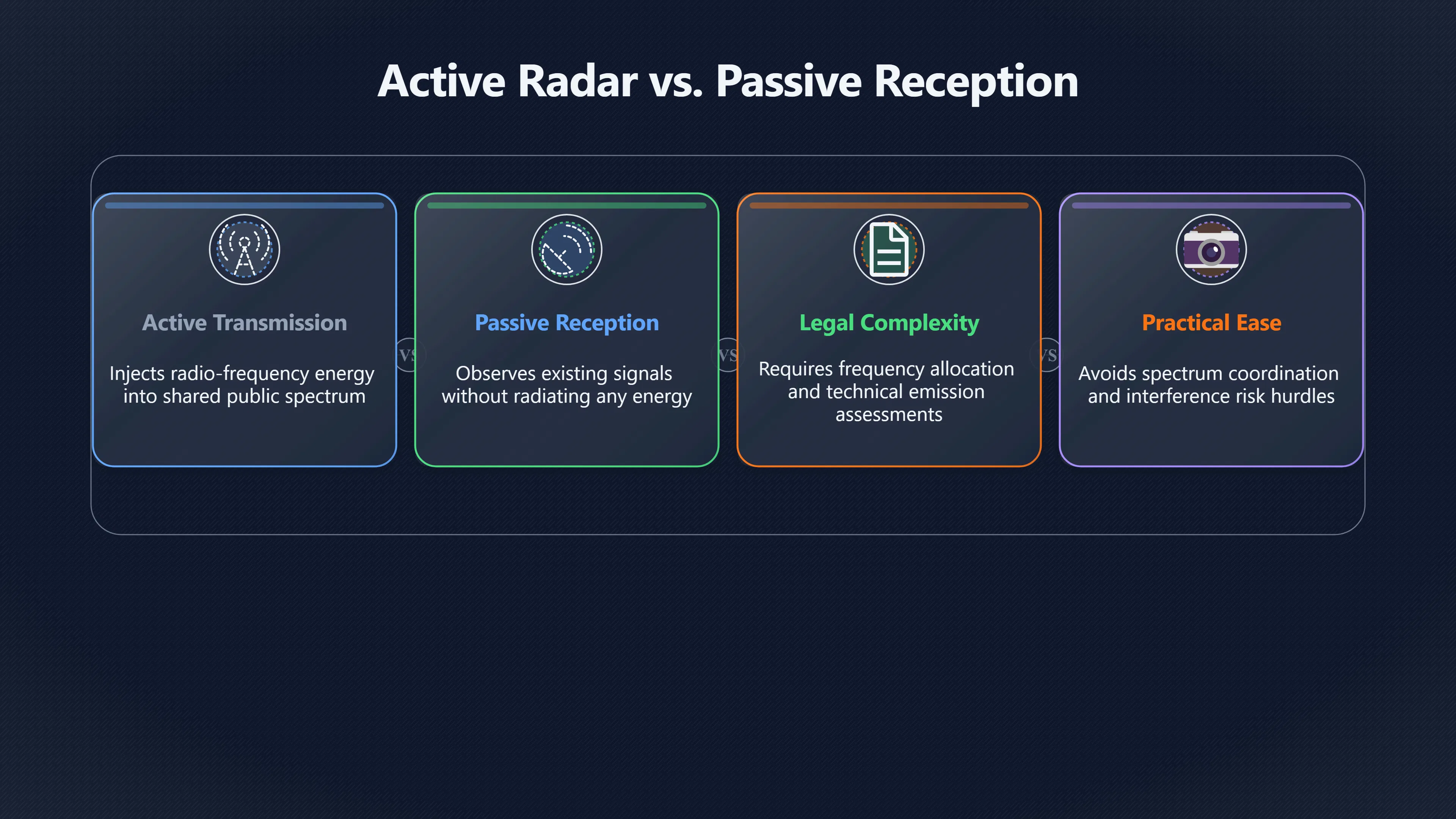
Radio spectrum is a shared public resource. Aviation, emergency services, weather radar, satellite communications, mobile networks, broadcasting and scientific services all depend upon carefully coordinated frequency use. An active radar transmitter does not simply “look” at the sky—it injects radio-frequency energy into that shared environment.
National regulators therefore distinguish sharply between receiving signals and transmitting them. In the United Kingdom, Ofcom regulates wireless transmissions under the Wireless Telegraphy Act, while the Civil Aviation Authority (CAA) also has responsibilities where aviation systems are involved. Operating transmitting equipment without the necessary authorisations is generally unlawful unless a specific licence exemption applies.[Pilot & Club Info]members.gliding.co.ukPilot & Club Info Radio Requirements & GuidancePilot & Club InfoRadio Requirements & Guidance - Pilot & Club InfoUnder the Wireless Telegraphy (WT) Act 2006 it is an offence to install…
For radar installations, regulatory approval normally extends beyond obtaining permission to transmit. Depending on the application, authorities may require:
- allocation of an appropriate operating frequency;
- technical assessment of the equipment;
- demonstration that emissions meet required standards;
- coordination with other spectrum users; and
- continuing compliance with licence conditions.
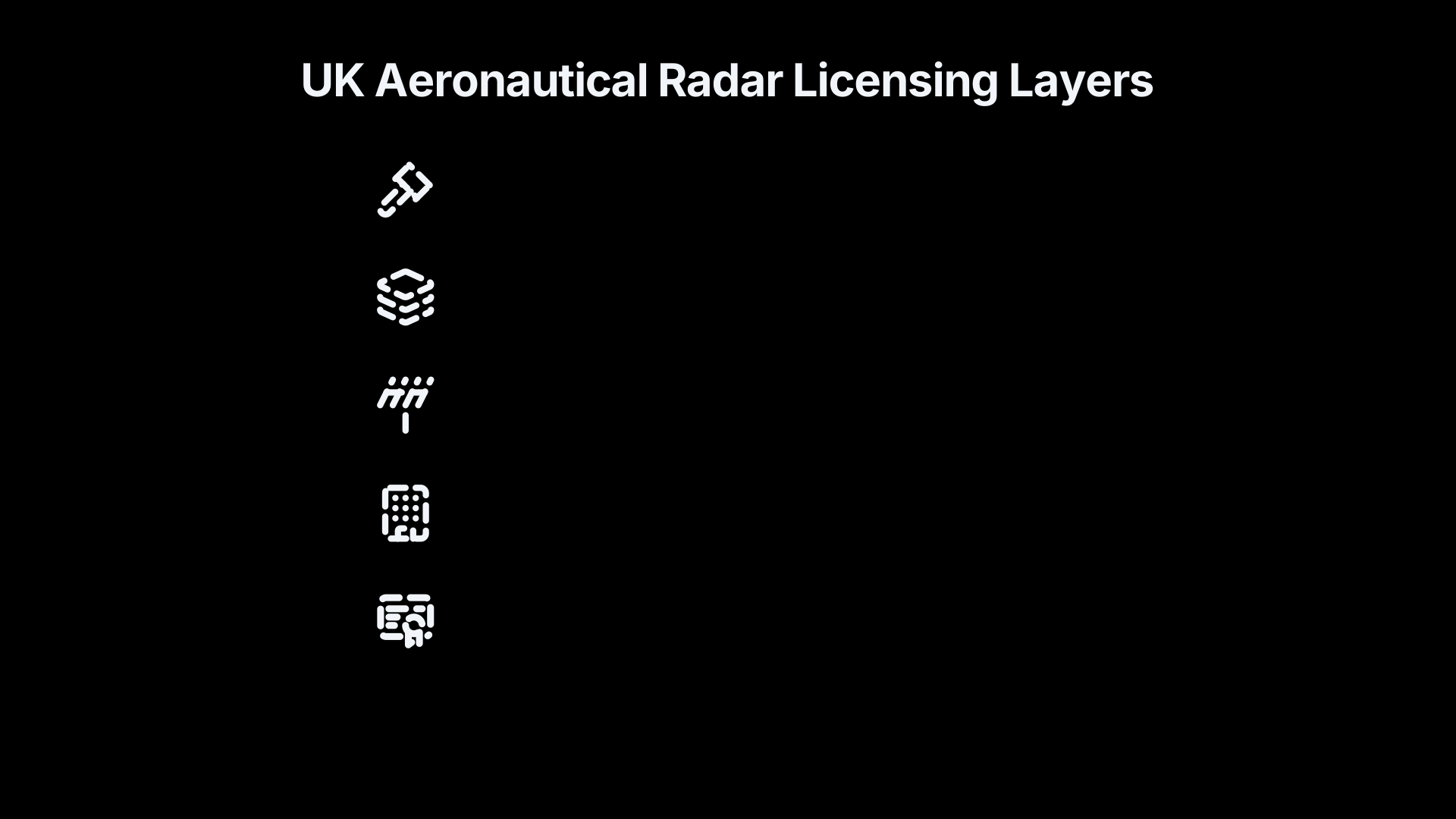
The licensing process for UK aeronautical radar illustrates this layered approach. Establishing an aeronautical radar ground station normally requires coordinated approvals involving both Ofcom and the CAA before the equipment may legally operate.[www.ofcom.org.uk]ofcom.org.ukAn aeronautical radio licence under the Wireless Telegraphyradar ground station licence application formNovember 15, 2021 — You may use this form to apply, amend or surrender an aeronautical radar…
Why a backyard radar is not a casual upgrade
A common misconception is that building a small radar is legally comparable to constructing a telescope or receiving antenna. The distinction is fundamental.
A camera, telescope or software-defined radio receiver simply observes existing signals. An active radar deliberately radiates energy, making it part of the radio spectrum environment.
Even relatively modest transmit powers can create problems because radar systems often use:
- high-gain directional antennas;
- pulsed transmissions with high peak power;
- frequencies that may already support safety-critical services; or
- signal characteristics capable of causing interference over considerable distances.
Unlike passive equipment, an active radar cannot normally be treated as a private experimental instrument simply because it is located on private property. Radio emissions do not stop at property boundaries.
Interference risks near aviation and communications
The strongest public-interest reason for regulating active radar is interference prevention.
Many radar frequency bands are already assigned to systems supporting aviation surveillance, weather monitoring, maritime navigation or defence. Even if a hobby-built radar uses relatively low average power, unintended emissions, harmonics or operation outside authorised limits could degrade nearby receivers.
Particularly sensitive services include:
- primary and secondary surveillance radar used for air traffic management;
- aeronautical navigation systems;
- weather radar;
- satellite downlinks;
- radio astronomy observations; and
- licensed commercial communications.
Interference is not always obvious to the person transmitting. A system that appears to function correctly in a garden workshop may still create unwanted emissions detectable many kilometres away, especially when directional antennas or elevated installations are involved. This is one reason regulators generally require spectrum coordination before authorising radar transmitters rather than relying solely on equipment testing after installation.[www.ofcom.org.uk]ofcom.org.ukAn aeronautical radio licence under the Wireless Telegraphyradar ground station licence application formNovember 15, 2021 — You may use this form to apply, amend or surrender an aeronautical radar…
Why an amateur radio licence is not enough
Some experimenters assume that obtaining an amateur radio licence automatically permits radar experiments. The reality is more limited.
Amateur radio licences authorise transmission only within designated amateur frequency allocations and subject to national licence conditions. They do not provide unrestricted authority to operate radar on arbitrary frequencies or within spectrum reserved for aviation, navigation or commercial services. Amateur operators must also avoid causing harmful interference and comply with technical emission limits.[Wikipedia]WikipediaAmateur radioAmateur radio
Experimental radar research is possible within some amateur allocations under carefully controlled conditions in certain jurisdictions, but these activities are constrained by amateur-service rules rather than exempting operators from spectrum regulation. Such experimentation is therefore quite different from constructing a general-purpose sky-surveillance radar intended to illuminate arbitrary airspace.
Why passive reception is the safer first step
For civilian UAP monitoring, passive techniques avoid nearly all of the regulatory burdens associated with active transmission because they receive rather than radiate radio energy.
Useful passive approaches include:
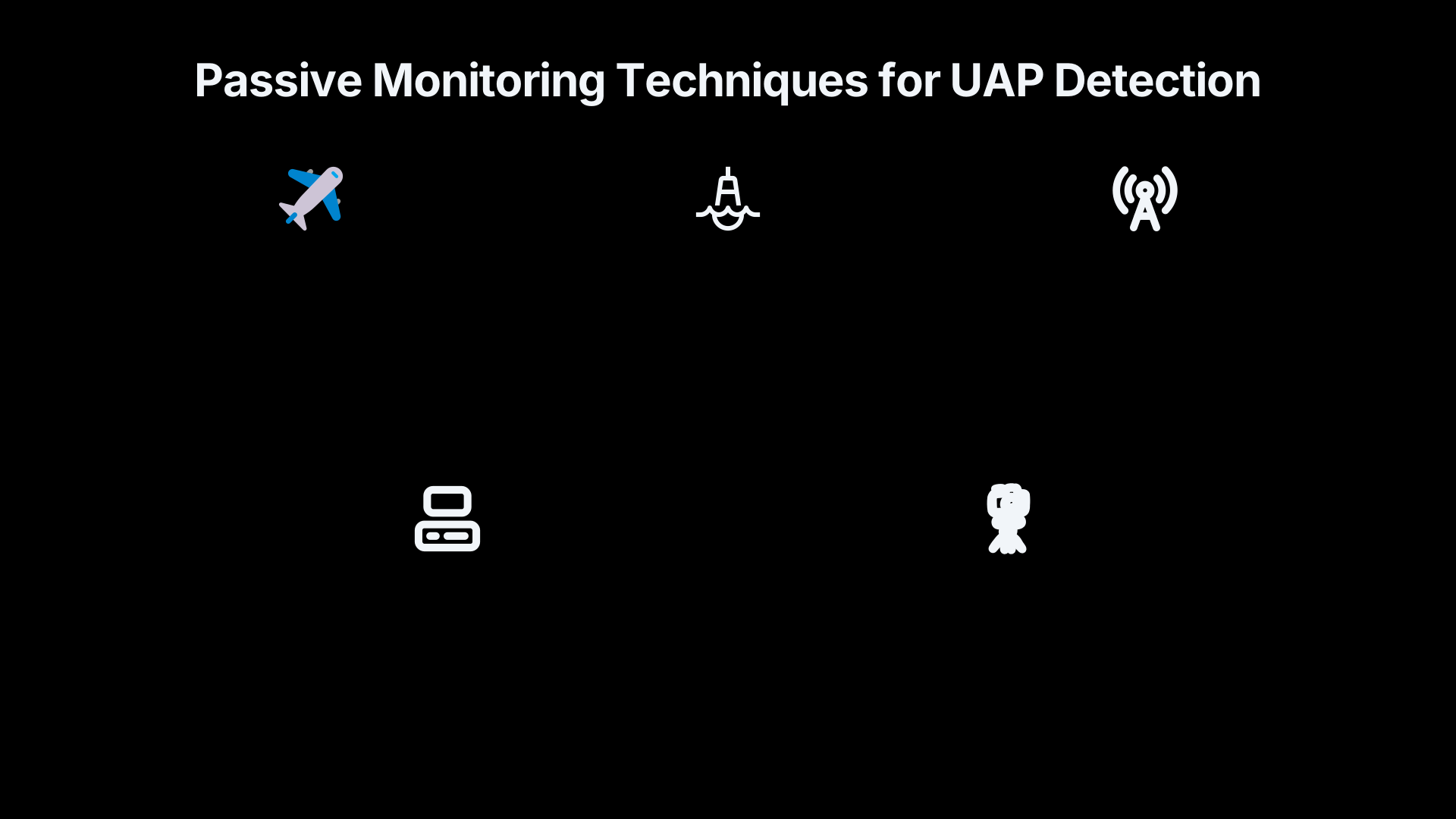
- receiving ADS-B and Mode S aircraft broadcasts to identify conventional traffic;
- monitoring publicly transmitted navigation or beacon signals;
- passive radar using existing broadcast transmitters as illuminators of opportunity; and
- general radio spectrum monitoring to correlate unusual events with known transmissions.
These methods can still contribute valuable corroborating evidence alongside optical cameras while avoiding the need to obtain spectrum assignments or transmit authorisations. They also eliminate the risk that the observing station itself becomes a source of radio interference.
From both a legal and practical perspective, passive reception scales far more naturally for citizen-science observatories than constructing an active radar transmitter.
Practical implications for automated UAP detector projects
For most privately operated observation stations, the regulatory landscape changes the engineering decision more than the electronics do.
Rather than asking “Can I build a radar?”, the more useful design question becomes “Can I improve evidence quality without transmitting?” In many cases the answer is yes. Combining calibrated optical cameras with passive radio receivers, aircraft identification data, accurate timing and environmental sensors produces a legally simpler, lower-cost and more easily deployable system than attempting to operate an active radar.
The result is not merely easier compliance. It also reduces technical complexity while avoiding the licensing, frequency coordination and interference risks that make backyard active radar far more than a casual hardware upgrade.[www.ofcom.org.uk]ofcom.org.ukAn aeronautical radio licence under the Wireless Telegraphyradar ground station licence application formNovember 15, 2021 — You may use this form to apply, amend or surrender an aeronautical radar…
Amazon book picks
Further Reading
Books and field guides related to Why backyard radar is not a casual upgrade. Use these as the next step if you want deeper reading beyond the article.
Introduction to Radar Systems
Explains how radar works while making clear the technical complexity behind active radar systems.

Radar Handbook
Provides comprehensive coverage of radar technologies and operational considerations.


Solutions Manual for RF and Microwave Wireless Systems
First published 2000. Subjects: Wireless communication systems, Microwave communication systems, Problems, exercises.
eBay marketplace picks
Marketplace Samples
Example marketplace items related to this page. Use the search link to explore similar finds on eBay.
Endnotes
1.
Source: ofcom.org.uk
Title: An aeronautical radio licence under the Wireless Telegraphy
Link:https://www.ofcom.org.uk/siteassets/resources/documents/manage-your-licence/aeronautical/forms/ofw593.pdf?v=326577
Source snippet
radar ground station licence application formNovember 15, 2021 — You may use this form to apply, amend or surrender an aeronautical radar...
Published: November 15, 2021
2.
Source: Wikipedia
Title: Amateur radio
Link:https://en.wikipedia.org/wiki/Amateur_radio
3.
Source: members.gliding.co.uk
Title: Pilot & Club Info Radio Requirements & Guidance
Link:https://members.gliding.co.uk/laws-rules/radiorequirements/
Source snippet
Pilot & Club InfoRadio Requirements & Guidance - Pilot & Club InfoUnder the Wireless Telegraphy (WT) Act 2006 it is an offence to install...
Additional References
4.
Source: facebook.com
Link:https://www.facebook.com/groups/12699105116/posts/10167826647070117/
Source snippet
Aviation radio transmission restrictionsI'm wondering why one can not find a cheap radio (think UV-5R type) that will transmit on aviat...
5.
Source: reddit.com
Link:https://www.reddit.com/r/amateurradio/comments/535srt/fcc_regulations_governing_land_based_surveillance/
Source snippet
FCC regulations governing land based surveillance radarI have been trying to find FCC regulations pertaining to operation of land based r...
6.
Source: rya.org.uk
Link:https://www.rya.org.uk/regulations/licensing-onboard-electronics/
Source snippet
Licensing onboard electronics | RegulationsGuidance on licensing onboard electronics, including VHF radios, EPIRBs, and radar, with requi...
7.
Source: caa.co.uk
Link:https://www.caa.co.uk/commercial-industry/airspace/communication-navigation-and-surveillance/spectrum/ofcom-caa-joint-statement-on-use-of-978-mhz-for-uas-and-change-in-audio-pmse-access/
Source snippet
Ofcom CAA Joint Statement on use of 978 MHz for UAS...11 Mar 2025 — Ofcom and the UK Civil Aviation Authority (CAA) are making 978 MHz a...
8.
Source: uk.practicallaw.thomsonreuters.com
Link:https://uk.practicallaw.thomsonreuters.com/4-200-8870?contextData=%28sc.Default%29&transitionType=Default
Source snippet
publishes decision to exempt use of automotive short...Office of Communications (Ofcom) published decision to exempt the use of automoti...
9.
Source: youtube.com
Title: Understanding the Radio Frequency Spectrum (#715)
Link:http://www.youtube.com/watch?v=E0ePePS1Iys
Source snippet
Radar spectrum regulations radio licensing Technician Class 5th Edition - Chapter 07 - Licensing Regulations W4EEY...
10.
Source: aurora.nats.co.uk
Title: EG GEN 3.4 en GB
Link:https://www.aurora.nats.co.uk/htmlAIP/Publications/2026-06-11-AIRAC/html/eAIP/EG-GEN-3.4-en-GB.html
Source snippet
3.4 COMMUNICATION AND NAVIGATION SERVICES11 Jun 2026 — The Civil Aviation Authority must approve in writing the design and installation o...
11.
Source: youtu.be
Title: Reed Summers
Link:https://youtu.be/VLN5KyKc99g
Source snippet
Mitch Randall on Skywatch Passive Radar UAP Tracking Alt Propulsion...
12.
Source: youtube.com
Title: Skywatch UFO Radar | Mitch Randall
Link:http://www.youtube.com/watch?v=jPffL1YFtrU
Source snippet
Understanding the Radio Frequency Spectrum (#715)...
13.
Source: youtube.com
Title: Mitch Randall on Skywatch Passive Radar UAP Tracking
Link:http://www.youtube.com/watch?v=ozYbZOyO5Eo
Source snippet
Skywatch UFO Radar | Mitch Randall...
Topic Tree