Within Parallax
Why Two Cameras Beat One Mystery
Two known observing sites can turn separate lines of sight into a three-dimensional location with uncertainty bounds.
On this page
- How paired sight lines locate a target
- What station spacing and timing must get right
- Where triangulation still leaves uncertainty
Page outline Jump by section
Introduction
A single camera can tell you where an object appears in the sky, but not how far away it is. That missing distance is the largest source of error when estimating an object’s size, altitude or speed. For automated instrumented UFO or UAP detection systems, one of the most effective ways to reduce that uncertainty is to observe the same target simultaneously from two or more known locations. By intersecting independent lines of sight, the system can estimate a three-dimensional position and attach measurable uncertainty to that estimate rather than relying on assumptions. This is the same geometric principle used in photogrammetry, surveying and astronomy, and it directly addresses the distance ambiguities that can make ordinary objects appear to move at extraordinary speeds.[Geodetic Systems+2Bartol Research Institute]geodetic.comGeodetic SystemsBasics of PhotogrammetryThe fundamental principle used by photogrammetry is triangulation. By taking photographs from at…
How paired sight lines locate a target
Triangulation begins with a simple idea. Each observing station measures the direction to the same object at the same instant. Every direction defines a line extending into space from a precisely known camera position. In an ideal world those lines intersect at a single point, revealing the object’s location.
Real systems are never perfect. Lens distortion, atmospheric effects, pixel resolution and pointing errors mean the lines usually pass close to one another rather than meeting exactly. Modern triangulation algorithms therefore compute the most probable three-dimensional point that best fits all available observations while also estimating confidence intervals around the solution.[mrcal.secretsauce.net+2arXiv]mrcal.secretsauce.netTriangulation methods and uncertaintyIntrinsics (lens behavior) and extrinsics (geometry) are required for both Pixel coordinates…
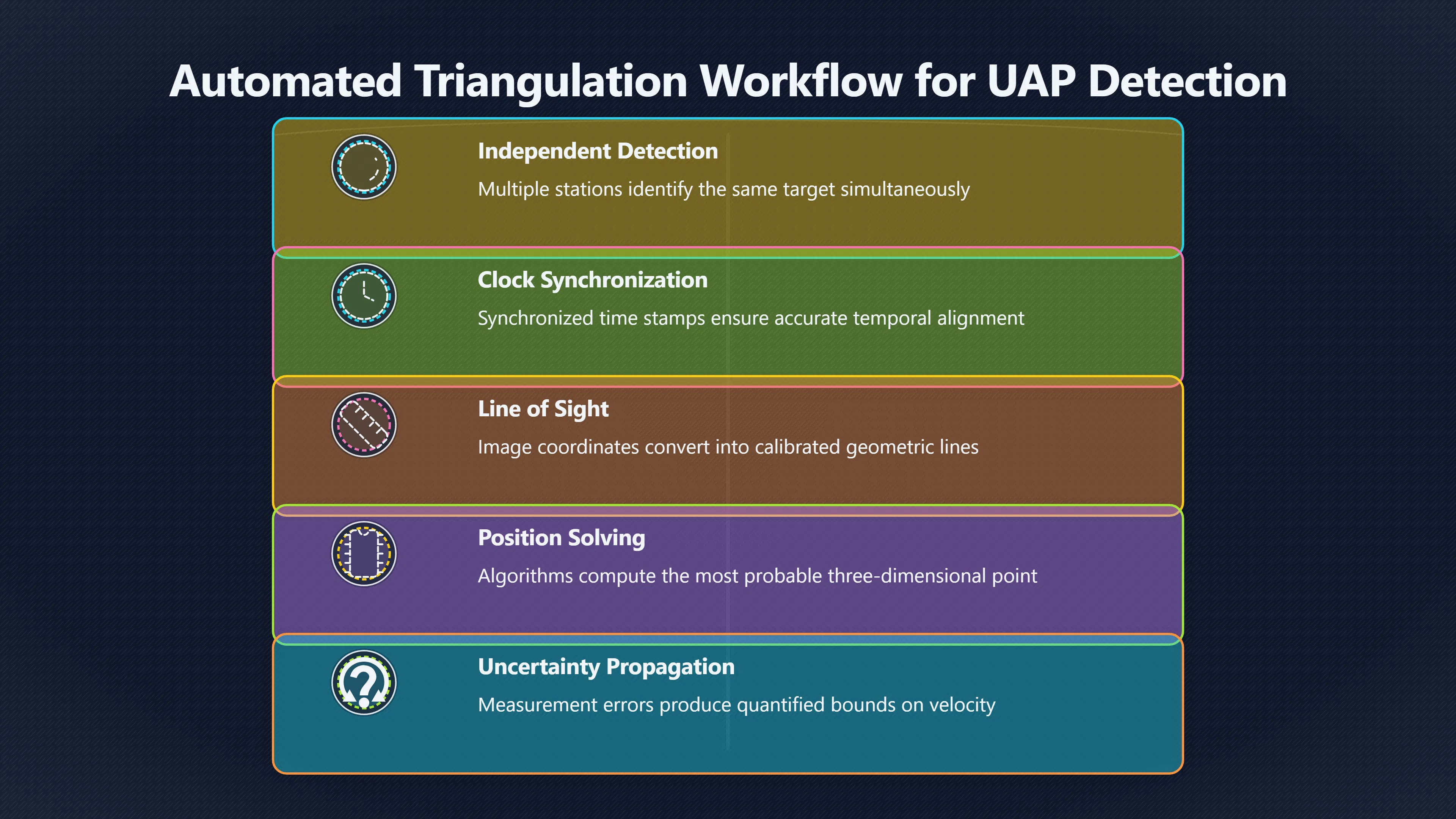
For an automated sky-monitoring network, the practical workflow is typically:
- Detect the same target independently at two or more stations.
- Timestamp each observation using synchronised clocks.
- Convert image coordinates into calibrated lines of sight.
- Solve for the three-dimensional position that best matches all observations.
- Propagate measurement errors to produce uncertainty bounds on range, altitude and derived velocity.
This changes the nature of the evidence. Instead of reporting that an object “appeared to cross the field rapidly”, the system can state, for example, that the object was reconstructed at a particular altitude with a quantified positional uncertainty.
What station spacing and timing must get right
Triangulation is only as reliable as the geometry behind it. Several implementation choices have a much greater effect on accuracy than adding more pixels to a single camera.
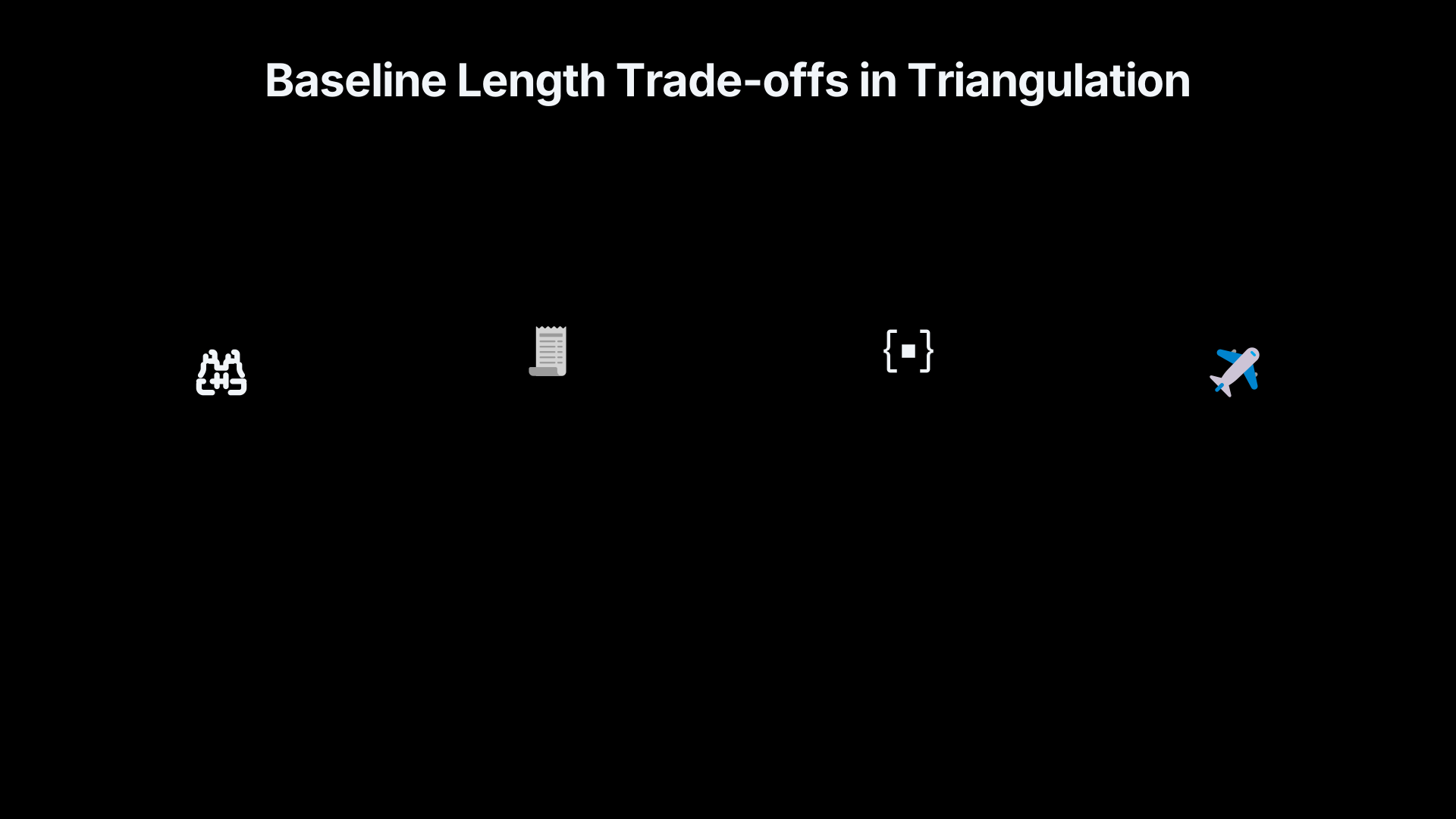
Baseline length
The baseline is the separation between observing stations. If cameras are placed too close together, they see nearly identical views and the measured parallax becomes very small. Tiny measurement errors then translate into large distance uncertainties.
Increasing the baseline generally improves range estimation, particularly for distant targets, because the viewing directions intersect at a larger angle. However, an excessively large baseline can reduce the overlap in visible sky and make it harder for both stations to observe the same object simultaneously. Practical systems therefore choose a baseline matched to the expected altitude range of interest rather than assuming that wider is always better.[Geodetic Systems+2ISPRS]geodetic.comGeodetic SystemsBasics of PhotogrammetryThe fundamental principle used by photogrammetry is triangulation. By taking photographs from at…
Camera calibration
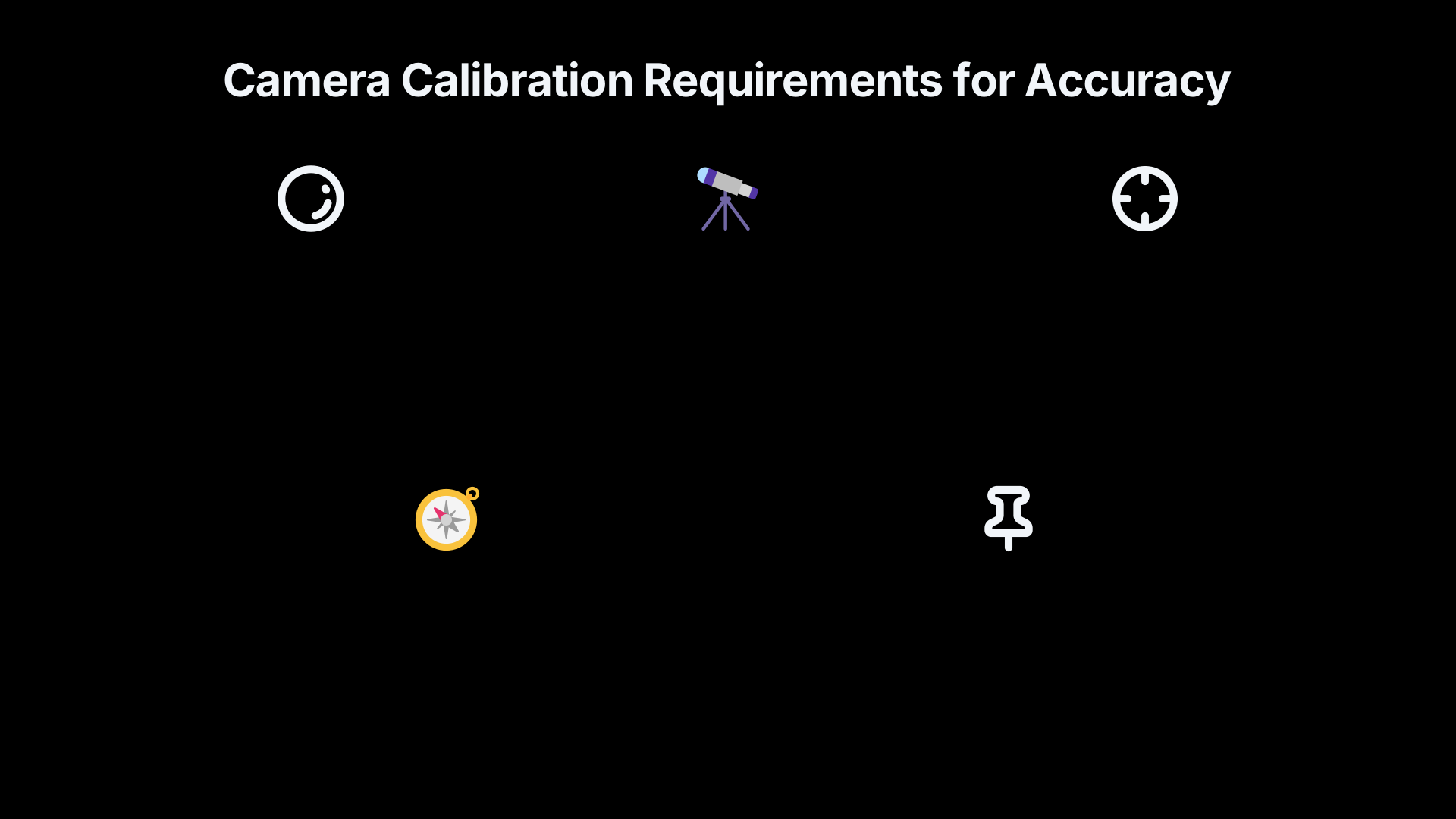
Accurate triangulation requires more than knowing where cameras are located. The optical characteristics of every camera must also be calibrated, including:
- lens distortion;
- focal length;
- image centre;
- camera orientation;
- precise geographical position.
Even small calibration errors can bias reconstructed positions by hundreds of metres for distant targets. Photogrammetry systems therefore treat calibration as a routine maintenance task rather than a one-time installation procedure.[Geodetic Systems+2University of Portsmouth]geodetic.comGeodetic SystemsBasics of PhotogrammetryThe fundamental principle used by photogrammetry is triangulation. By taking photographs from at…
Time synchronisation
Fast-moving objects require closely synchronised observations. If one camera records even a fraction of a second earlier than another, the reconstruction may combine two different object positions instead of one.
Research on unsynchronised camera systems shows that timing offsets can significantly complicate two-view geometry, requiring additional estimation before reliable triangulation becomes possible. In automated detector networks, GPS-disciplined clocks or equivalent precision timing systems are therefore highly desirable.[arXiv]arxiv.orgarXiv On the Two-View Geometry of Unsynchronized CamerasOn the Two-View Geometry of Unsynchronized CamerasApril 22, 2017…
Why triangulation reduces impossible-speed claims
The parent problem in UAP analysis is that apparent angular motion cannot by itself reveal true speed. A nearby bird, balloon or insect may sweep rapidly across a camera’s field of view, while a distant aircraft may appear almost stationary.
Triangulation attacks this uncertainty directly by measuring distance instead of guessing it. Once range is known, angular motion can be converted into a physically meaningful velocity. If the reconstructed distance is much greater than originally assumed, dramatic apparent motion often becomes entirely consistent with ordinary aircraft, balloons or atmospheric objects.
This approach complements the broader lessons highlighted by analyses of parallax and forced perspective. Rather than attempting to interpret extraordinary-looking footage from a single viewpoint, multi-station measurements provide an independent geometric check before claims of extreme acceleration or impossible manoeuvres are made.[AARO+2DefenseScoop]aaro.milForced Perspective and Range Estimation. Figure 1: Example of…Read more…
Where triangulation still leaves uncertainty
Triangulation is powerful, but it does not eliminate every ambiguity.
A frequent practical difficulty is ensuring that each station has identified the same target. In crowded skies containing aircraft lights, satellites or birds, incorrect matching can generate false three-dimensional solutions. Automated systems therefore benefit from combining image appearance, motion history and precise timing when associating detections.
Atmospheric conditions also matter. Heat shimmer, haze, clouds and low contrast reduce angular precision, widening the uncertainty region around the reconstructed position. At long ranges, even very small angular errors can produce substantial distance errors despite using multiple stations.[mrcal.secretsauce.net]mrcal.secretsauce.netTriangulation methods and uncertaintyIntrinsics (lens behavior) and extrinsics (geometry) are required for both Pixel coordinates…
Finally, triangulation reconstructs position, not identity. A system may accurately determine that an object is 12 kilometres away at a particular altitude while still being unable to determine whether it is a balloon, drone, aircraft or another object. Identification requires additional evidence such as higher-resolution imagery, spectral measurements, radar returns or comparison with known traffic databases.
Implementation priorities for automated detector networks
For automated instrumented UAP detection, triangulation is best viewed as a core design feature rather than an optional enhancement. The greatest gains usually come from improving geometry and measurement quality instead of relying on increasingly sophisticated interpretation of single-camera footage.
Effective implementation emphasises:
- at least two geographically separated observing stations with overlapping sky coverage;
- precise survey of station locations;
- rigorous camera calibration and regular recalibration;
- accurate clock synchronisation across the network;
- automatic estimation and reporting of positional uncertainty rather than single-point estimates;
- integration with other sensors where available to cross-check reconstructed positions.
The result is a system that produces measurements with explicit confidence bounds instead of relying on visual impressions. Within automated UFO detection, that shift—from apparent motion in one image to quantified three-dimensional geometry—is one of the clearest ways to reduce distance error and avoid unsupported claims of impossible speed.
Amazon book picks
Further Reading
Books and field guides related to Why Two Cameras Beat One Mystery. Use these as the next step if you want deeper reading beyond the article.
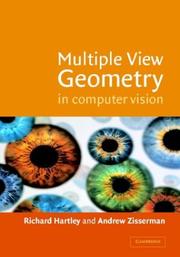
Multiple view geometry in computer vision
Explains triangulation, multi-camera geometry and 3D reconstruction.
Introduction to Modern Photogrammetry
Directly addresses triangulation and measurement from imagery.


Digital image processing
Provides image analysis foundations supporting automated detection.
eBay marketplace picks
Marketplace Samples
Live-tested eBay searches with available results related to this page.

Endnotes
1.
Source: geodetic.com
Link:https://www.geodetic.com/basics-of-photogrammetry/
Source snippet
Geodetic SystemsBasics of PhotogrammetryThe fundamental principle used by photogrammetry is triangulation. By taking photographs from at...
2.
Source: aaro.mil
Link:https://www.aaro.mil/Portals/136/PDFs/Information%20Papers/AARO_Effect_of_Forced_Perspective_and_Parallax_View_on_UAP_Observations_2024.pdf
Source snippet
Forced Perspective and Range Estimation. Figure 1: Example of...Read more...
3.
Source: mrcal.secretsauce.net
Title: Triangulation methods and uncertainty
Link:https://mrcal.secretsauce.net/triangulation.html
Source snippet
Intrinsics (lens behavior) and extrinsics (geometry) are required for both Pixel coordinates...
4.
Source: arxiv.org
Link:https://arxiv.org/pdf/2107.04618
Source snippet
Optimal Triangulation Method is Not Really Optimalby SM Nasiri · 2021 · Cited by 11 — Abstract Triangulation refers to the problem of fin...
5.
Source: arxiv.org
Title: arXiv Absolute Triangulation Algorithms for Space Exploration
Link:https://arxiv.org/abs/2205.12197
6.
Source: isprs.org
Link:https://isprs.org/proceedings/XXXV/congress/comm5/papers/188.pdf
Source snippet
delay systems can achieve relatively low measurement uncertainty fact...
7.
Source: arxiv.org
Title: arXiv On the Two-View Geometry of Unsynchronized Cameras
Link:https://arxiv.org/abs/1704.06843
Source snippet
On the Two-View Geometry of Unsynchronized CamerasApril 22, 2017...
Published: April 22, 2017
8.
Source: defensescoop.com
Title: uap aaro findings [go fast]({{ ‘go-fast/’ | relative_url }}) puerto rico mt etna objects
Link:https://defensescoop.com/2024/11/19/uap-aaro-findings-go-fast-puerto-rico-mt-etna-objects/
Source snippet
Pentagon's UAP office reviews findings on Go Fast, Puerto...19 Nov 2024 — “AARO and its partners disproved the obiect flew through the a...
9.
Source: space.com
Title: pentagon ufo chief tells senate very anomalous objects need careful study video
Link:https://www.space.com/space-exploration/search-for-life/pentagon-ufo-chief-tells-senate-very-anomalous-objects-need-careful-study-video
Source snippet
Pentagon UFO chief tells Senate 'very anomalous objects'...19 Nov 2024 — In that case, the object's apparent speed in the video was actu...
10.
Source: arxiv.org
Link:https://arxiv.org/pdf/2306.04516
Source snippet
Scientific Perspectivesby R Dodson · 2023 · Cited by 3 — This development would bring order of magnitude improvements of sensitivity and...
11.
Source: arxiv.org
Link:https://arxiv.org/html/2411.02401v1
Source snippet
A Civilian Astronomer's Guide to UAP Research5 Nov 2024 — This [review]({{ 'review/' | relative_url }}) explores how astronomers can enhance our understanding of these eni...
12.
Source: aaro.mil
Title: UAP Records
Link:https://www.aaro.mil/UAP-Records/
Source snippet
/Information Papers13 Feb 2026 — This informational paper provides an overview of these visual effects. Effect of Forced Perspective and...
13.
Source: aaro.mil
Link:https://www.aaro.mil/Resources/
Source snippet
ResourcesEffect of Forced Perspective and Parallax View on UAP Observations · Correlations of Starlink Satellite Flaring with UAP Observa...
14.
Source: bartol.udel.edu
Link:https://www.bartol.udel.edu/~owocki/phys133/3%20-%20Triangulation%20and%20Parallax.pdf
Source snippet
Bartol Research InstitutePHYS133 – Lab 3 Triangulation and ParallaxThis lab consists of two parts, a practical use of triangulation on la...
15.
Source: researchportal.port.ac.uk
Link:https://researchportal.port.ac.uk/files/27394406/Synchronization_and_calibration.pdf
Source snippet
University of PortsmouthSynchronization and calibration of a stereo vision systemby X Chen · Cited by 11 — In this paper, we present a st...
Additional References
16.
Source: cris.fbk.eu
Link:https://cris.fbk.eu/retrieve/ddb241a5-6766-ba8a-e053-3a05fe0afd55/Towardsreal-timelargescaleunderwaterphotogrammetryforsubseametrologyapplications_PID5934751.pdf
Source snippet
real-time underwater photogrammetry for subsea...by C SA · Cited by 33 — This solution guarantees that 3D points are triangulated with a...
17.
Source: amsdottorato.unibo.it
Link:https://amsdottorato.unibo.it/id/eprint/9489/1/Chiara%20Francolini_PhD%20Thesis_XXXIII_AMS.pdf
Source snippet
Francolini_PhD Thesis_XXXIII_AMSThey are the fundamental of the photogrammetry and are used for example in the spatial intersection, spac...
18.
Source: ccatobservatory.org
Link:https://www.ccatobservatory.org/papers/
19.
Source: theforestawakening.com
Title: effect of forced perspective and parallax view on uap observations 35a2093a
Link:https://theforestawakening.com/incidents/effect-of-forced-perspective-and-parallax-view-on-uap-observations-35a2093a
Source snippet
Effect of Forced Perspective and Parallax View on UAP...1 Jan 2024 — AARO explains how forced perspective and parallax effects can accou...
20.
Source: youtube.com
Link:https://www.youtube.com/watch?v=pl4ah_HvWkg
Source snippet
The Math and Science of Forced PerspectiveForced perspective is just an optical illusion to make an object appear larger or smaller or cl...
21.
Source: reddit.com
Link:https://www.reddit.com/r/UFOs/comments/1gv8xak/aaro_has_resolved_the_go_fast_uap/
Source snippet
Wind speed at that altitude was 60 knots. Object moved in a relatively straight...Read more...
22.
Source: reddit.com
Title: This report remains [unresolved]({{ ‘unresolved/’ | relative_url }}) due to lack of technical data.Read more
Link:https://www.reddit.com/r/UFOs/comments/1ko9q2o/aaro_has_posted_another_unresolved_case_video/
Source snippet
AARO has posted another unresolved case (video): "This...This footage, captured by an infrared sensor in 2024, was later reported to AAR...
23.
Source: youtube.com
Link:https://www.youtube.com/watch?v=UzIKWnZJ29s
Source snippet
Top 10 Unidentified Aerial Objects Tracked by Military Systems - YouTube Top 10 Unidentified Aerial Objects Tracked by Military Systems...
24.
Source: armed-services.senate.gov
Title: aaro case slides 112024
Link:https://www.armed-services.senate.gov/download/aaro-case-slides-112024
Source snippet
Proposed AARO Branding Guide5. With the F/A-18 flying into the wind, the UAP apparent high speed due to parallax (right) is amplified com...
25.
Source: pubmed.ncbi.nlm.nih.gov
Link:https://pubmed.ncbi.nlm.nih.gov/17076062/
Source snippet
of motion parallax and perspective cues on...by J Tozawa · 2006 · Cited by 16 — In three experiments we examined the relative effectiven...
Topic Tree